Inspiring Quotes: Life and Living

Someone in my family died a couple of days ago. A wonderful and kind woman who had been fighting a disease for a long time. And there are two other people, very close to me, who are struggling for life – a two and a half year old and a 60 year old.

We have no control over when and how we will die. But we can choose how we live – with gratefulness, happiness, peace, contentment, love, laughter, fulfillment, forgiveness, action… or with complaints, anger, worries, greed, hate, jealousy, procrastination…

“Somebody should tell us, right at the start of our lives, that we are dying. Then we might live life to the limit, every minute of every day. Do it! Whatever you want to do, do it now! There are only so many tomorrow.” (Pope Paul)

“Live as if you were to die tomorrow. Learn as if you were to live forever.” (Mahatma Gandhi)

“As long as I have a want, I have a reason for living. Satisfaction is death.” (George Bernard Shaw)

“As a well spent day brings happy sleep, so a life well spent brings happy death.” (Leonardo Da Vinci)

“The fear of death follows from the fear of life. A man who lives fully is prepared to die at any time.” (Mark Twain)

“Death is not the greatest of loss in life. The greatest loss is what dies inside us while we live.” (Norman Cousins)

“Have courage to live. Anyone can die.” (Robert Cody)

“A man who dares to waste one hour of life has not discovered the value of life.” (Charles Darwin)

“A man whose today is the same as yesterday is as good as dead.” (Imam Ali)

“Life is too short to complain.” (Yours truly)

[Photo of a Muslim graveyard in Sarajevo]
Please check out and join Mush’s Page on Facebook.

The most inspiring video ever: 3 A’s of Awesome!

I know that’s a very bold claim, but I haven’t watched anything else that’s so short yet so inspiring and effective!

Check out my new Facebook Page.

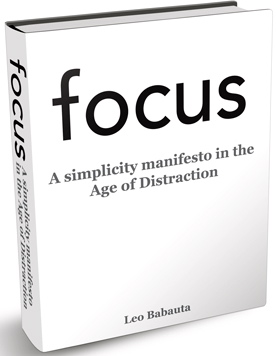
Free ebook: Focus – a simplicity manifesto in the age of distraction

I just finished reading this wonderful book by Leo Babauta. It’s an important reminder of the importance of focus in this age of distraction, and how to achieve it. The book is available for free and is ‘un-copyrighted’ by the author so you can share it with as many people as you want. Just click on the image to download the PDF version.

It’s an essential guide for everyone who needs to focus, and covers lots of useful stuff like:

  • the importance of finding focus
  • the beauty of disconnection
  • how not to live in your inbox
  • creating an uncluttered environment
  • strategies for prioritizing
  • systems for getting amazing things done
  • single-tasking and productivity

Download it now.

Why not a “Happy New Day”?

It’s wonderful to see most people getting excited about the new year – the greetings, fireworks, cheer, and most importantly, the optimism for the year ahead.

I wonder why can’t we greet each new day with the same cheer and optimism. Isn’t waking up each morning a reason to be grateful and happy? Isn’t every day a chance to celebrate life and everything it has to offer? If that seems a bit too extreme, then how about ‘happy new week’? Could we not be as excited about the challenges and surprises that each new week brings?

This year try new month resolutions at the start of every new month. I can tell you from experience, they work much better than new year resolutions.

Next time you get a ‘happy new day’ or a ‘happy new week’ greeting from me, you’ll know why 🙂

PS. I started a Mush’s Page on Facebook to spread the ideas about enhancing life further. It also makes it easier for you to ‘like’, ‘comment’ or ‘share’ with just one click. Check it out.

[Photo of sunrise this morning by Sara]

Happiness, Health and Productivity – best of 2010

Here’s a collection of links to some of the most popular posts on my blog during the last 12 months. I hope you find them useful and consider sharing with friends. These may have some ideas for your New Year Resolutions too:

On Happiness:

On Health and Nutrition:

On Productivity:

Please let me know which ones did you find most useful.

[Photo taken during a hike in Rotorua, NZ – Nov. 2010]

Hanna Rosin: New data on the rise of women

Interesting presentation about how women are surpassing men in so many areas, not just in the US but globally. The era of male dominance is slowly coming to end as women gain more power in this postindustrial economy.

Another reason to show more respect towards our womenfolk 🙂

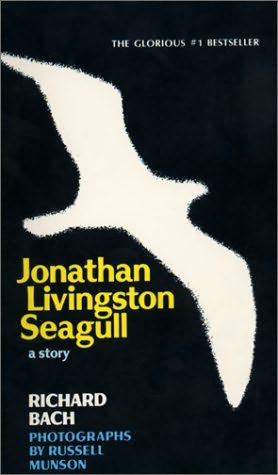
Jonathan Livingston Seagull by Richard Bach

Watching lots of seagulls recently, I was reminded of this inspiring book I had read a few times during the late 80’s. I just read it again and realized why it’s called a classic. It’s a short and simple story of a seagull called Jonathan Livingston Seagull, but the message is powerful and inspiring. Instead of a review, here are a few excerpts from the book:

…Most gulls don’t bother to learn more than the simplest flight – how to get from shore to food and back again. For most gulls, it is not flying that matters, but eating. For this gull, it was not eating that mattered, but flight. More than anything else, Jonathan Livingston Seagull loved to fly.

…Jonathan Seagull discovered that boredom and fear and anger are the reasons that a gull’s life is so short, and with these gone from his thought, he lived a long fine life indeed.

…’How you manage to love a mob of birds that has just tried to kill you?’ ‘Oh, you don’t love that! You don’t love hatred and evil, of course. You have to practice and see the real gull, the good in every one of them, and to help them see it in themselves. That’s what I mean by love.’

I recommend this book very highly, regardless of your age, interests or profession. Please share what your favorite books are.

[Photo taken at the Rotorua Lake, NZ. More beautiful photos of NZ here.]

5 things everyone can learn from the Aussies

Having spent ten days in Australia, I was reminded of the many good things about the Aussies:

  1. Good day, mate! It’s the local greeting but also an attitude of happiness and friendliness. You can only greet each other with enthusiasm if you are really happy and grateful with your life. Otherwise, it will be the usual ‘how are you?’ and ‘not bad’. That attitude is also reflected in their choice of vocabulary. It’s not ‘nice’, it’s ‘fantastic!’ or ‘awesome!’ Simply put, ‘life is good!’
  2. Work to live. Most Aussies don’t live to work. A standard working day for most offices is 8-4:30 and 9:30-5:30 for most shops. This means more time for life outside of work – family, socializing, sports and hobbies. Yes, many Australians actually have hobbies like gardening, woodworking etc. Do they get less work done compared to those who regularly work overtime in many other countries? I don’t think so.
  3. Sunday is family day. Unlike many of us, most Aussies actually have a ‘plan’ for Sundays. And the key elements of the plan are family and outdoors – beach, picnics, parks, hikes. That’s not only great bonding time for the family, but also very healthy.
  4. No worries, mate! That’s also more of an attitude than just another local phrase you hear often. Aussies seem to genuinely believe that no problem is big enough to worry; given some time, most situations sort themselves out; getting stressed doesn’t make things easier. I wonder if they have one of the lowest rates of stress-related illnesses in the world.
  5. Play to win. Aussies are clearly one of the most competitive people, and it’s not just in sports. I think they generally like to excel at whatever they do – be it making a coffee, raising a child or winning an olympic gold. This is also obvious in a higher standard of services.

I am sure some readers will have many negative things to say about the Aussies. Every one of us, every nation, every place has negatives and positives. But I find myself much happier when focusing on the good rather than the bad, particularly when I am traveling. Please share your positive thoughts about your favorite place.

[Photo taken from a boat in Sydney. You can see some more spectacular photos here.]

Jeff Bezos: What matters more than your talents

In this Princeton University graduation address, Amazon founder Jeff Bezos makes the case that our character is reflected not in the gifts we’re endowed with at birth, but by the choices we make over the course of a lifetime. A short but inspiring talk:

If you like reading this blog, subscribe for email updates. You may connect with Mush on FacebookTwitterFlickr or YouTube.


5 things to do while looking for a job

Version 3

Whether you are starting fresh, have just been set free (fired) or are in between jobs, looking for a new job can be extremely frustrating. Here are some tips to keep you sane, make the most of the time and even increase your chances of landing a job:

  1. Make the best of your time. While most people complain about not having enough time to do everything they want to do, you have all the time in the world. You can waste it by sleeping more, watching more TV, spending more time on the Internet etc. Or you can do more productive things like reading, writing, exercise, travel etc. But the best investment of your time is in learning things that will increase your ‘market value’ e.g. learn a language; teach yourself advanced computer skills; start a blog on something you care about… Wake up at six in the morning and do one or more of these as a “job”.
  2. Stay motivated. You hear about the bad economy, increased competition, unemployment rate, market conditions etc. but you manage to motivate yourself and start sending lots of applications. After a few interviews the ‘facts’ start to sink in and you start getting depressed. You allow your self-esteem and your confidence level to drop. Now you are not as enthusiastic and motivated at interviews; you get some more rejections; you get even more depressed… and the cycle repeats itself. Don’t let that happen. Be prepared for 100 interviews before getting a job, and do your best at every one of them. See each interview as part of the process, as another step towards the destination.
  3. Use all the resources. Remember that somebody somewhere wants to hire someone exactly like you. The more you reach out, the better your chances of connecting with that someone. Find job listings in every newspaper, magazine and website. Talk to headhunters – they are not just for top-level jobs. Connect with everyone you have ever known; social media like Facebook, Linkedin etc. make it easier than ever to find long lost friends and make new ones. Don’t be shy in letting the world know that you are looking for a job.
  4. Volunteer. Whether for a cause that you care about or at a job that interests you, volunteering allows you to keep busy, stay motivated and make new connections with potential employers.
  5. Try direct sales. Most direct selling companies are always hiring people without any relevant experience, regardless of the economic conditions. Good direct selling companies offer free training, excellent products, above-average income potential and regular motivation, and do not require more than 4-6 hours of daily commitment. It’s an excellent way to improve your communication skills, learn how to motivate yourself, make lots of new contacts and even make some money while looking for “the job”.

In summary, get out and get busy; have some daily routine; stay active and in touch with your field; learn new skills; try new things. Any employer will prefer to hire someone who has been busy and active, who has been doing ‘stuff’ while being ‘jobless’. Don’t wait to get lucky; the harder you work, the luckier you will get. Good luck!

The Worst Uses of Your Mobile Phone

I was in a business meeting recently where the other person kept looking at his phone for messages or emails every time it vibrated. He even typed a couple of messages during the hour long meeting while we exchanged important information and discussed a possible business relationship. Do you think I want to do business with this person?

I was reminded of a time when an estate agent was showing me an apartment when his phone rang and he started chatting non-stop. After waiting for about five minutes, I just walked out of the apartment. When he called back to ask what had happened, I told him exactly what had happened and never met him again.

Whether you are in an important business meeting, or having quality time with a loved one, responding to a call or looking at messages/emails only communicates one thing to the other person: You are not as important as the person calling/messaging/emailing me right now. I think these are some of the worst uses of your mobile phone:

  1. Holding it in your hand or placing it in front of you during a business or personal meeting. If you are expecting a call, let the other person know.
  2. Looking at it every now and then, and reading emails/messages during important conversations. If you must read or send an urgent message, please excuse first.
  3. Immersing yourself in your phone when in a social gathering. That only means: Do not disturb, or I am not interested in any conversation.
  4. Talking loudly on your phone in a public place without any consideration for other people. Either talk softly, or move away from the people.
  5. Typing on your phone while walking, and expecting other people to watch and move out of your way. Ever seen a collision of two people typing on their phones without looking up?

It’s funny how we use our mobile phones to connect with everyone in the world, and often forget to connect with all the people around us – often the most important people in our lives that we just take for granted.

Here’s a funny video clip of Jerry Seinfeld talking about the ‘iPhone and Blackberry People’.

    Do You Respond or React?

    In every situation or problem, we have a choice to respond or react. And our choice determines how we get affected by the situation or problem. My favorite example is that of a delayed flight. Most passengers choose to react by asking for an explanation for the delay, calling up family and friends to share the anger (‘why does it always happen to me?‘), demanding to ‘speak with the manager’, expecting free meals, continuing to be angry even after taking off and landing at the destination and perhaps for the rest of the day. If you choose to respond, you could be grateful that they found out the problem with the plane or the pilot or the weather while you are still on the ground, rather than finding out when you are 35,000 feet up in the air. You could catch up on some phone calls or shopping or reading, or simply enjoy doing nothing for a change. If the flight has been indefinitely delayed, you can also respond by trying to find another connection to your destination.

    When someone criticizes you, you can react by offering explanations or starting an argument. Or you can respond by trying to understand the other person’s perspective, by accepting that you aren’t perfect and by being grateful that someone cared enough to tell you about your weakness. Continue reading

    Mobile Phone Salesman Goes After His Dream!

    You may have heard the story of Paul Potts who has literally taken the world by storm. Since his astounding first audition on Britain’s Got Talen, his humble nature and awesome talent has inspired many. He pulled on the heart strings of viewers who have enjoyed seeing someone overcome self confidence issues and adversity to fulfill a lifelong dream.

    Watch this inspiring and uplifting video of his first audition through this link, because I could not embed it here. Over 15 million people have watched it!

    If you like reading this blog, subscribe for email updates. You may connect with Mush on FacebookTwitterFlickr or YouTube.

    Watching Fish Can Reduce Stress

    Studies have shown that gazing at aquarium fish reduces stress and subsequently lowers blood pressure. Even watching a video of fish has been proven to have therapeutic effects.

    During our recent holiday in Dubai, we went to see the much-hyped aquarium at the Atlantis. And it was quite an experience! I also recorded a couple of amateur videos to share the beauty of some of the best fish I had ever seen. Here’s one…

    See another one here, and let me know what you think.

    Daniel Goleman on Compassion

    An inspiring talk by the award-winning author of Emotional Intelligence. Daniel asks why we aren’t more compassionate more of the time…

    If you like reading this blog, subscribe for email updates. You may connect with Mush on FacebookTwitterFlickr or YouTube.

    45 Tips for a Happy Marriage – these still work!

    A repost from last year:

    We just celebrated our 25th wedding anniversary, and we consider ourselves very fortunate to enjoy a great relationship and still be in love. Considering that we are so different from each other in so many ways and that we rarely agree on anything, we often wonder what has kept us so happy together. It’s a few things.

    We realize and accept the fact that everyone is different; everyone has his or her strengths and weaknesses. We don’t try to change the other. We choose to focus on the strengths and accept the weaknesses – unless one needs help and encouragement in overcoming a certain weakness. We have come to understand that being in love is not enough for a happy marriage. Happy partners choose to be happy, and they do certain things in a certain way. We have been following a certain unwritten code of conduct about how we treat each other and how we deal with our differences.

    Communication is the key. Like in any other relationship, good communication is the key to a happy marriage. You don’t need a degree in communications; it’s mostly common sense. It’s Ok to argue, but you must follow certain rules. Few tips to enhance communication with your partner:

    1. Be honest.
    2. Talk to each other often.
    3. Listen when the other is talking.
    4. Express any concerns quickly.
    5. Compliment often; criticize rarely.
    6. Never criticize in public.
    7. Never yell at each other.
    8. Never bring up mistakes of the past.
    9. Never use the word ‘always’ and ‘never’ in arguments.
    10. Don’t go to bed with an unsettled argument.
    11. Say ‘I love you’ often… and mean it.
    12. Be quick to say ‘I am sorry’.
    13. Forgive and forget quickly.
    14. Never keep secrets from each other.
    15. Keep the in-laws out of your marriage.

    What happened to the romance? Remember the first time you started seeing each other? You used to dress up, make-up, put on your best self, hold hands, and do things to please your partner. Why does it have to be any different after few years? Keeping the romance alive is an essential part of being happy with your partner. Some tips for the un-romantics: Continue reading

    10 Inspiring Quotes on Forgiveness

    Millions of Muslims around the world are celebrating their Eid (pronounced as eed) Festival today. It’s a day of family, friends, feast, festivity and forgiveness. I hope the following quotes inspire you to forgive others, and yourself, for all the wrongs of the past.

    I can forgive, but I cannot forget, is only another way of saying, I will not forgive.  Forgiveness ought to be like a cancelled note – torn in two, and burned up, so that it can never be shown against one. (Henry Ward Beecher)

    The weak can never forgive.  Forgiveness is the attribute of the strong. (Mahatma Gandhi)

    To forgive is to set a prisoner free and discover that the prisoner was you. (Lewis B. Smedes)

    Forgiveness is the sweetest revenge. (Isaac Friedmann)

    Never does the human soul appear so strong as when it forgoes revenge, and dares forgive an injury. (E.H. Chapin)

    Always forgive your enemies – nothing annoys them so much. (Oscar Wilde)

    Forgiveness is me giving up my right to hurt you for hurting me. (Anonymous)

    Never forget the three powerful resources you always have available to you: love, prayer, and forgiveness. (H. Jackson Brown)

    There is no love without forgiveness; and there’s no forgiveness without love. (Byrant McGill)

    Forgiveness is the economy of the heart – forgiveness saves the expense of anger, the cost of hatred, the waste of spirits. (Hannah More)

    Which one did you like best? Do you have a favorite quote on forgiveness? Please share through comments.

    [Photo of a popular shrine in Iran, taken in July 2009]

    If you like reading this blog, subscribe for email updates. You may connect with Mush on FacebookTwitterFlickr or YouTube.

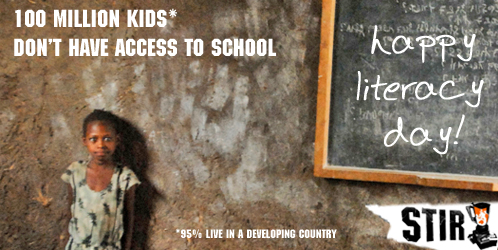
    International Literacy Day 2010

    Today, 8th September was the International Literacy Day 2010.

    Worldwide, there are more than 770 million illiterate adults, two-thirds of whom are women. In addition, there are over 100 million children not currently enrolled in primary school and millions of others not currently enrolled in secondary school. Education is a lifelong gift that empowers people to ultimately improve socioeconomic conditions for their families, communities, countries, and future generations. Through the opportunities that only an education can provide, we can break the cycle of illiteracy, one child at a time.

    The Literacy Site and Room to Read, are two of the organizations that provide books to children in some of the poorest regions of the world, including Tibet, India, Vietnam, and Laos. Check out their websites to see how you can help.

    If you like reading this blog, subscribe for email updates. You may connect with Mush on FacebookTwitterFlickr or YouTube.

    What’s Empathy? By Jeremy Rifkin

    Jeremy Rifkin is president of the Foundation on Economic Trends and the author of 17 bestselling books on the impact of scientific and technological changes on the economy, the workforce, society and the environment. I haven’t read any of his books yet, but I found this talk/animation very informative, useful and even inspiring:

    If you like reading this blog, subscribe for email updates. You may connect with Mush on FacebookTwitterFlickr or YouTube.

    What Does it Take to Achieve Your Goals?

    I have wondered about these questions for many years: Why most people can’t fulfill their dreams? Why most goals are not achieved? Why most plans don’t work out? Why so much action doesn’t produce the desired results?

    Working with thousands of salespeople and sales managers for over 20 years, I have learnt that there are only four reasons. Whether it’s about your career, health, money, relationships or any other goals that you fall short of, it is because:

    1. You don’t really want it. Whatever ‘it’ is that you are after. Are you having sleepless nights thinking and planning for it? What if you don’t get it? Will you settle without it? Do you have a specific time frame in mind? These questions can help you determine if you really want something badly enough. Otherwise, it’s not even a goal – just one of those wishes which may or may not be fulfilled. And you will be OK either way.
    2. You don’t believe it’s possible. It’s an inner voice that tells you, you can’t do it. ‘I can never lose so much weight.’ ‘I don’t think I am made for this.’ ‘It’s just not worth it.’ You believe you don’t have what it takes – the talent, opportunity, looks or whatever. 
    3. You don’t know how. You don’t have the knowledge or the skills required to achieve the goal, and worse still, you don’t know that. Like the salesperson who doesn’t put in the time and effort to learn the product or the skills. Or like someone who spends an hour working out every day without knowing the basics of fitness or nutrition.
    4. You aren’t willing to pay the price. In other words, you don’t take any action towards your goal. You are lazy; you procrastinate. As someone said, ‘If you are only interested, you will do what’s convenient. If you are committed, you will do whatever it takes!’

    Do you know of any other reasons? Knowing what’s holding you back is a big first step towards achievement of your goals – unless you are #4.

    If you like reading this blog, subscribe for email updates. You may connect with Mush on FacebookTwitterFlickr or YouTube.