More iCards (inspiration cards) here.

80% of premature heart disease, stroke and diabetes can be prevented! Common, preventable risk factors underlie most non-communicable diseases. Most non-communicable diseases are the result of four particular behaviors:
These behaviors lead to one or more of the four key physiological changes:
And these are the causes of heart disease, stroke and diabetes.
Everyone dies, but not watching what we eat, not exercising, and the use of tobacco and alcohol are equivalent to killing ourselves!
[Most of the above information is taken from World Health Organization website]
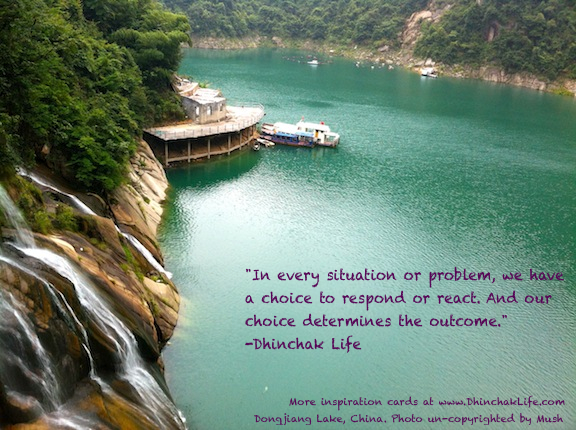
What’s the difference between problems and situations, or responding and reacting? Related post.
Why ‘Happy New Week?’ Related post.
Did you read about the official launch of my book: Dhinchak Life?

Whether or not you are a great storyteller or not, you surely are a great story-maker. In fact, most of us are!
You get the idea? These are all the beginnings of great stories – mostly fiction. Question is, why do we mostly choose to make stories that make us unhappy, sad, depressed, angry, frustrated or disappointed? And the problem is, our stories affect our beliefs and actions. Negative stories usually result in negative actions.
If we are going to make stories, why not make positive ones that make us happy, smile, laugh, and feel good about ourselves and other people e.g.
Try giving people the benefit of doubt. Try to make positive stories, and see if they result in positive actions – yours and others’.

These iCards (inspiration cards) are all un-copyrighted. Please feel free to download more from here, and share.
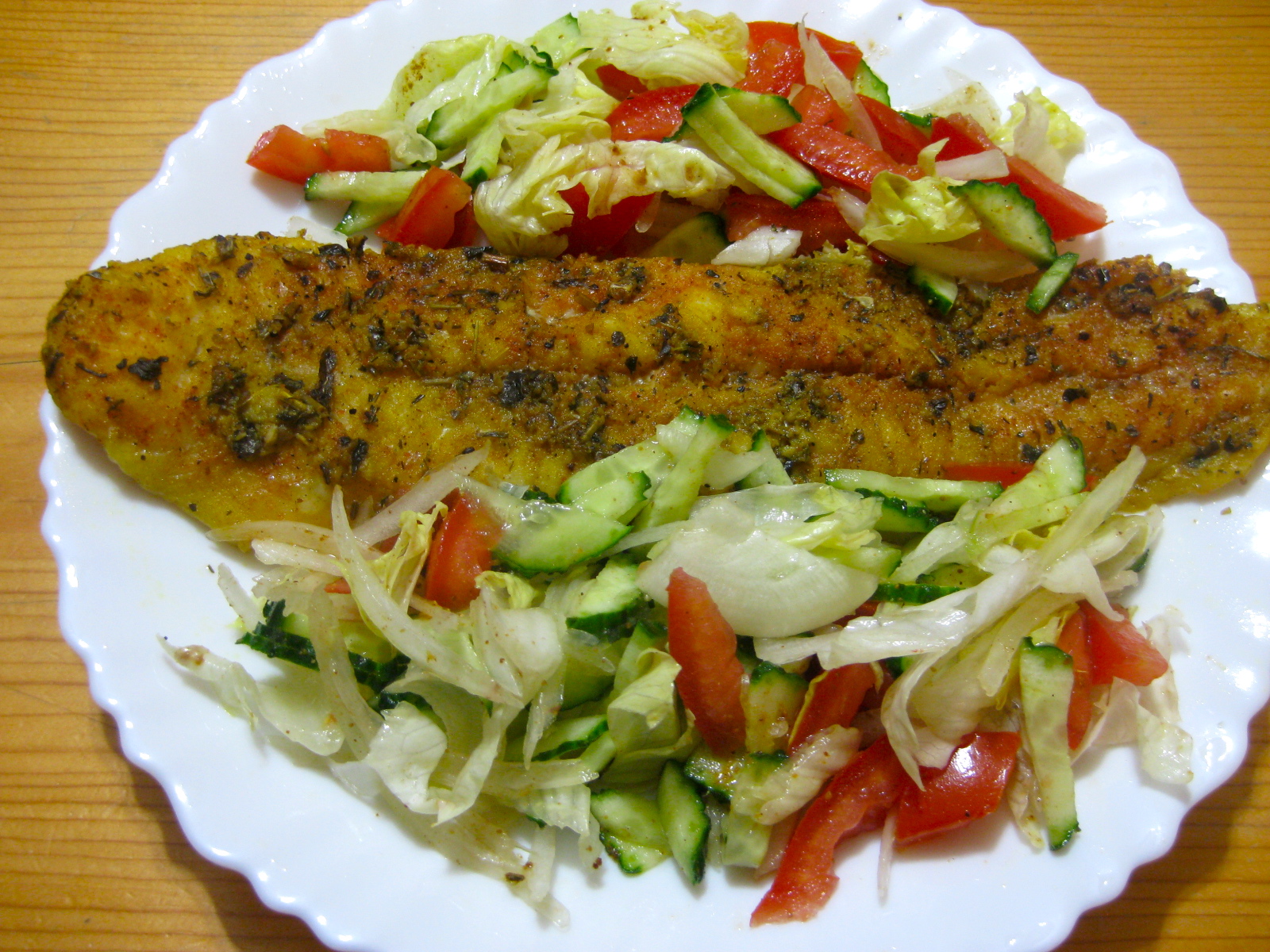
In a post last month, I wrote about my introduction to Paleo and the 30-day challenge. Well, 30 days are over and here are the results: lost 3kg and 2 inches from the waist.
If you don’t want to read the book, here’s the summary: The basic theory behind the Paleo Diet is that our bodies are evolutionary and genetically designed to thrive on Paleolithic era. You choose foods that were available during the caveman-era, such as meat, fish, eggs, roots, vegetables, berries and mushrooms. And you give up on all processed foods and everything that came along after agriculture and animal farming were adopted such as sugar, added salt, dairy, grains and all processed or fast foods. You drink water and eliminate all beverages, except green tea and coconut water.
My challenge was to cut down on lentils, yogurt, fruits, home-made roti (bread) and the afternoon latte, while introducing eggs and meat back into my diet. Here’s what my diet looked like: Continue reading
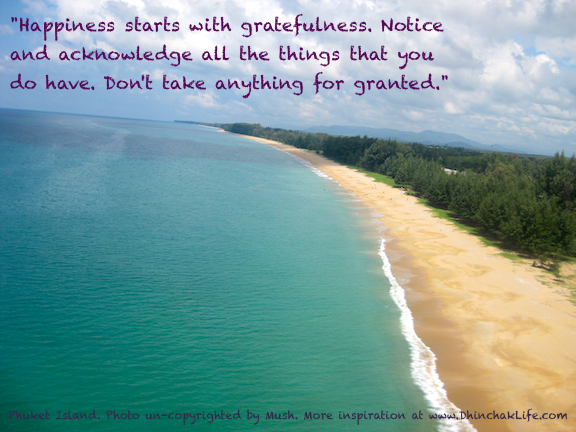
We all have those moments when we feel low, unhappy or a bit depressed. Somebody said something that hurt. Someone didn’t notice your good work and you felt bad. Your actions didn’t produce the desired results, and you got depressed. The problem with such feelings is the negative cycle they create, so it’s important that you quickly reverse the emotions. There are many ways to do that, but the one that takes the least amount of time and effort is gratefulness.
 Sit in a quiet place, close your eyes and think of 30 good things in your life that you may be taking for granted e.g.
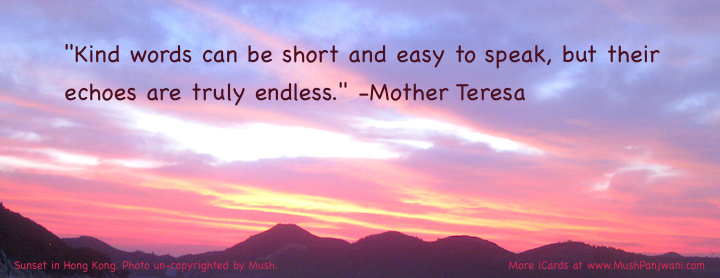
All of us have experienced the positive feeling when someone says something nice to us and we know they mean it. A genuine compliment or appreciation often takes 2-3 words but can result in instant happiness and an immediate shift in your mood. Here’s a list of some of those 2-3 word phrases that can change somebody’s life, even if for a few hours or days – of course, you can’t use all of these with everyone:
I think someone’s quality of life and level of happiness can be measured in the number of compliments they give and receive. What was your last compliment?
“Too often we underestimate the power of a touch, a smile, a kind word, a listening ear, an honest compliment, or the smallest act of caring, all of which have the potential to turn a life around.” -Leo Buscaglia
Did you know: Our body (how we sit, stand, walk, and our facial expressions) changes our minds; our mind changes our behavior; our behavior changes our outcomes.
It’s something I first learnt from ‘Awaken the Giant Within’ by Anthony Robbins – more from his talk than from the book. I’ve been applying, and teaching this principle in all sales/motivational training programs. It’s not only relevant at work, but in all communications with others and ourselves. And now Amy Cuddy’s research on body language reinforces the concept further: that we can change other people’s perceptions — and even our own body chemistry — simply by changing body positions. Whether you are familiar with the concept or not, please stop and watch this inspiring video from TED…
 Download free iCards (inspiration cards) here. And what’s Happy New Week?

When I started swimming this summer after almost a year’s break, I could barely do two lengths at a time. Disappointed with my fitness level, I set myself a goal to do 25 lengths (625 meters), without a break, before the season was over. I had six months to achieve the goal but the voices from inside said ‘that’s too hard’, ‘but you are traveling half the time’, ‘why not 20 lengths that I used to do comfortably?’
My only response to the voices was: ‘Small steps towards big goals’. It’s a principle that has always worked for me, and for many others that I have shared it with. It’s a simple principle:
Most importantly, we must understand the difference between a wish/dream and a goal: A goal is specific and has a deadline. ‘I wish I could swim like that guy’ or ‘I need to improve my stamina’ is not the same as ‘I will swim 25 lengths in one go, before the end of October.’
In summary: Pick one thing from your wish list. Convert it into a six-month goal. Break it down into monthly milestones and daily or weekly action steps. Start the action; don’t give up. Every goal achieved will give you more confidence in yourself and the principle.
“If you hear a voice within you say, ‘you cannot paint’, then by all means paint. And that voice will be silenced.” -Van Gogh
PS. I did my 25 lengths today. Next goal: 1km swim before the end of the year.
[Photo during River Li cruise with Salma – another one of the important goals achieved this month]

These eCards are made using my own photos, and are free to download and share. Some more here.

Same time last week, I was struggling with my translation app while chatting to a local family over dinner, overlooking the quiet Dongjiang Lake in a remote area of China, called Chenzhou. The family owned the small hotel I was staying in. I had no hurry to go back to my room; no plans for the next day or the day after. I was discovering the joys of traveling solo.
For most of my life, I believed traveling alone for leisure/holiday could not be fun. I even let go of many opportunities to see new places just because I didn’t have company. Sometimes the idea seemed very selfish, considering that I have a wonderful family I love to travel with. But my first solo trip to New Zeeland changed it all. I realized the benefits of traveling alone and have never missed an opportunity. After my trip to Chenzhou, a couple of friends asked me how could I travel alone to such places. And that inspired this post, which answers the why instead of how:
I am all in favor of enjoying holidays with family and friends, which can be great fun and some of the best bonding experiences. But traveling solo has its own joys that you must experience.
Please share your experience if you have traveled solo, or your fears if you haven’t. These eCards were part of an inspiration during the same trip. Check them out and let me know what you think.
This video has had millions of hits on YouTube. In a couple of other videos, the trainer has confirmed that Arther had to change his diet a lot, apart from the yoga. Some people are asking about the diet or exercise program; some are asking whether or not Arther can maintain his weight. To me, this just shows the power of belief and the human will.
Please share with anyone who needs some inspiration.

[Photo of an amazing flower during a recent hike in Hong Kong]
 Don’t spend your precious time asking, ‘Why isn’t the world a better place?’ It will only be time wasted. The question to ask is ‘How can I make it better?’ To that there is an answer.
If haven’t read or heard Leo Buscaglia, please search for his talks on YouTube. His lectures on love and living are extremely motivational!
[Photo of the Bride’s Pool Waterfalls in Hong Kong, taken last week]
 Have you ever been inspired by Nelson Mandela’s stories of the struggle for freedom, his perseverance over the 27 years in prison, his reforms during presidency, or the 250 awards he received over the last 40 years? You can read more about his inspiring life in his book, Long Walk to Freedom, or in this summary at Wikipedia. Today is Mandela’s 94th birthday, and the Nelson Mandela’s International Day. Here’s my selection of ten quotes by Mandela, starting with the one I find the most inspiring:
Which one did you like best?
[Photo of Cape Town City Hall, taken during my trip in December 2011. This is where Mandela gave his first public speech after being released from the prison.] Another related post.

[Here’s the original post a year ago on this blog]
This post is inspired by someone I met today in Colombo. When he decided to move back to Sri Lanka from the Middle East 15 years ago, his wife wasn’t too happy with the decision. She loved Dubai too much. This man promised his wife that he’ll bring her to Dubai for at least ten days every year. And he hasn’t missed a year since. He told me it was difficult at times to take the ten days off because of work pressure, or other priorities, ‘but a promise is a promise’.
How often do we sabotage our relationships, health, productivity, talent, dreams… by not fulfilling the commitments that we make to ourselves or others. Whether big or small, every broken promise adds up to create an unhappy situation. Some of the most commonly broken promises I can think of:
And I am as guilty as anybody else. What about you? Let’s promise to keep our promises!
[Photo during a take-off from Hong Kong last week – totally unrelated to the topic, of course]
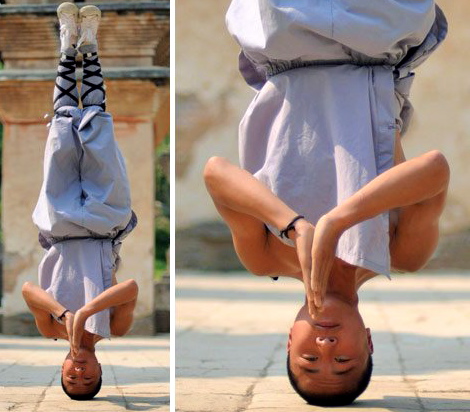
I learnt a new phrase today: Being a 3-day monk. It’s a direct translation of a Japanese term, “Mikka Bouzu” (me-kah boh-zu). A 3-day monk is a person who starts a new project with a lot of commitment and passion, only to give it up soon and move on to something else. It could be a new diet plan, exercise routine, language course, music lesson, quitting a bad habit, starting a good habit… anything that takes time and consistency to be effective.
We are all guilty of being a 3-day monk for one thing or the other. Why do we quit so easily? Why is it so difficult to pursue anything with consistency? What would it take to be a 30-day or 300-day monk?
[Photo of a Shaolin Monk demonstrating his superior balancing skills learnt over years of practice]
PS. My first book, Dhinchak Life, was written over a period of two years – one piece per week.

[Photo during one of the McLehose Trails in Hong Kong]
Find more inspiration in my new book: Dhinchak Life
 Mush Panjwani