‘Dhinchak Life’ Kindle Edition, and 10 benefits of ebooks!

Many of you had asked about the ebook version of my first book, Dhinchak Life. The Kindle edition is now available at Amazon! And here are ten of the many benefits of ebooks over printed books:

  1. You can buy it now, without leaving your computer, as long as you have Internet access and a credit card. Kindle apps are now available for PC, Mac, Android, Windows phone, Blackberry, iPad, iPhone and iPod, for free.
  2. Ebooks are usually half the price of softcovers and one third the price of hardcovers. Dhinchak Life is USD15 for the softcover (plus shipping) while the ebook is just USD5.99.
  3. Ebooks are environmentally friendly – since you save on the paper, ink and chemicals.
  4. Ebooks don’t take up shelf space. Less stuff = less clutter = more happiness.
  5. You won’t lose your Kindle ebooks even if you lost the device you store them on. There’s always a copy on Amazon server.
  6. You can touch a word and look up the meaning instantly in the dictionary.
  7. You can highlight your favorite passages and go back to them later; you can also see what other Kindle readers have highlighted in the book you are reading, if you wish.
  8. You can share your highlighted pieces with friends on Facebook and Twitter.
  9. You can increase or decrease the font size, adjust the brightness and the background color to suit your eyes and the lighting conditions. No need for a reading lamp.
  10. You can carry all your books, those you have finished and those you are reading, with you while traveling.

Of course, you can’t share ebooks with friends and family as you share printed books. And you still have to go to bookshops if you miss the smell of printed pages. I look forward to your comments.


What does your profession demand?

I met a fat doctor. Though I don’t like to judge people by their appearances, I wouldn’t quite trust him with my own health and well-being. What will be your first impression when you see…

  • A dentist with bad teeth?
  • A tailor in shabby clothes?
  • A teacher who doesn’t like kids?
  • A beautician who is less than beautiful?
  • A manager who is not organized?
  • An educationist who doesn’t like to read?
  • A banker or financial expert with no money?
  • A motivational trainer who gets depressed easily?
  • A salesperson who doesn’t use her own products, or worse still, uses competitive products?

These are examples of people who are in the wrong jobs/business; who don’t believe in what they do; who don’t practice what they preach. Every profession comes with certain demands and responsibilities, fulfilling which results in success and happiness. And so does every relationship. As a spouse, we must find the time for our partner. As parents, we have to be the role models. As friends we have to be there. And what about our responsibilities towards the community, towards our fellow human beings and towards the world we live in?

“It’s easy to dodge our responsibilities, but we cannot dodge the consequences of dodging our responsibilities.”

Diana Nyad: precious life, extreme dreams, accepting defeat…

In the 1970s, Diana Nyad set long-distance swim records that are still unbroken. Thirty years later, at 60, she attempted her longest swim yet, from Cuba to Florida. She talks about how to prepare mentally to achieve an extreme dream, and asks: What will YOU do with your wild, precious life? Extremely inspiring!

Less stuff = more happiness

I’ve lived with this mantra for over five years now, so I was obviously very interested to watch Graham Hill’s talk on TED with that title. He has summarized the benefits very well, but he doesn’t tell us what did he do with all his collections, possessions and stuff. Here’s my story and tips:

When I started the process of reducing my possessions and simplifying my life, I started with the biggest chunk – my collection of books. I realized I wasn’t going to re-read most of them. My hope that my kids would read them all one day wasn’t realistic because they don’t have the same interests as mine. So I gave them all away to friends or charity. I also got rid of the book shelf, so that the books I continue to buy must be given away soon after I finish reading them. Since the iPad, I only buy digital books. They are cheaper, easy to store/backup and environment friendly. You can increase the font size and brightness; you can highlight passages; you can call up a dictionary by just touching the word. And if you really miss the touch and feel and smell of real books, you can visit the book store once a while and get all that for free. I have also tried audio books, and they have their benefits too.

Then I was able to simplify my entire wardrobe to fit into ten hangers and one drawer – plus a small suitcase with winter stuff on one side and special occasion stuff on the other. I took most of the unnecessary clutter out of my life – excessive suits, shoes, belts, ties, watches (I’ve actually stopped wearing a watch), videos, CDs etc. I still need to finish scanning the photos and get rid of the albums. All of this means, I need less space for my possessions and less maintenance time. I can focus on quality instead of quantity/variety. I only buy things that I really need and have space for. If I buy a new shirt, an old shirt has to go.

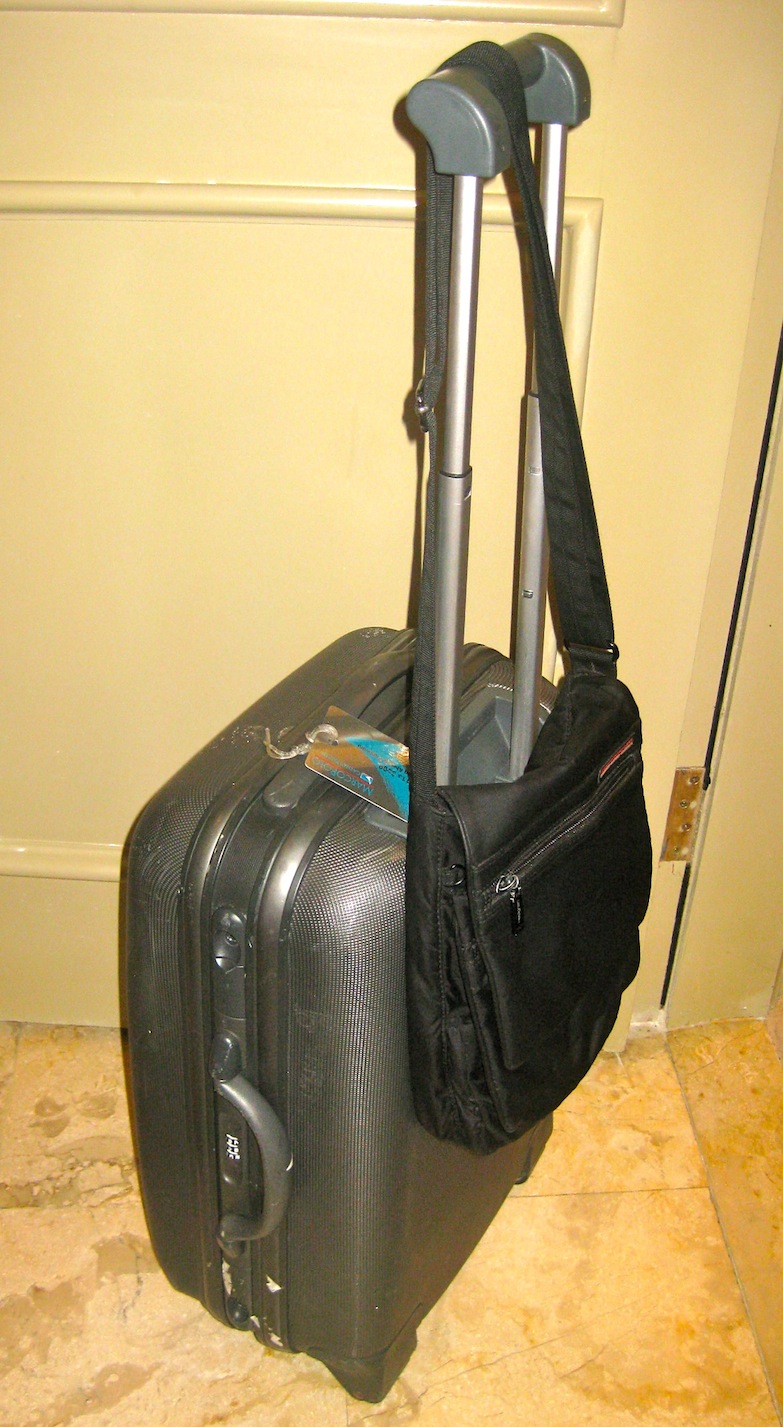
My travel bag has got smaller and smaller, regardless of the length of the trip, and is now down to a small carry-on, without the additional backpack that used to go with it. I still take all the photos and make all the movies with my pocket Canon Ixus. That means I can pack easily and quickly, travel much lighter and move around easily. I have applied the same principle to my work i.e. office space and desk. It’s all easier said than done, but extremely rewarding and worthwhile. I believe it makes you more productive, more efficient, lighter and happier!

[Photo of my travel bags taken just now in the hotel room. The shoulder bag has the camera, spare battery, spare SD cards, phone, wallet, passport, charger, pens and few other essentials]

Another Year of Blogging and Enhancing Life

When I decided to start writing a book in 2009, a good friend* advised me to start a blog instead. That way people can read as I write it. The plan was to put together the book as soon as I had 100 posts/articles. I almost forgot about the plan and lost count of the posts until I saw the year-end report from WordPress.

Allow me a little bit of bragging: Thanks to all of you, my readers and subscribers, the number of views reached 48,000 in 2011 – up from 23,000 in 2010 and 16,000 in 2009! The current number of followers is an encouraging 298. There are 244 posts on the blog, and the most popular have been:

  1. How I lost 3 kg in 3 weeks (8,463 views)
  2. 11 Health Benefits of Fasting (7,154 views)
  3. 10 Inspiring Birthday Quotes (5,639 views)
  4. Does Rice Make you Fat? (2,278 views)
  5. 45 Tips for a Happy Marriage (1,201 views)
  6. 37 Things we Take for Granted Everyday (1,025 views)
Thank you, also for the wonderful feedback, comments and emails that encourage me to keep writing. As for the book, it was one of the few things on my 2011 to-do list that I didn’t do. But it’s back on my 2012 to-do list. Happy Reading in 2012, and please keep the comments coming.
* Thank you, Altaf, for the idea, encouragement and technical help to get me started with blogging!
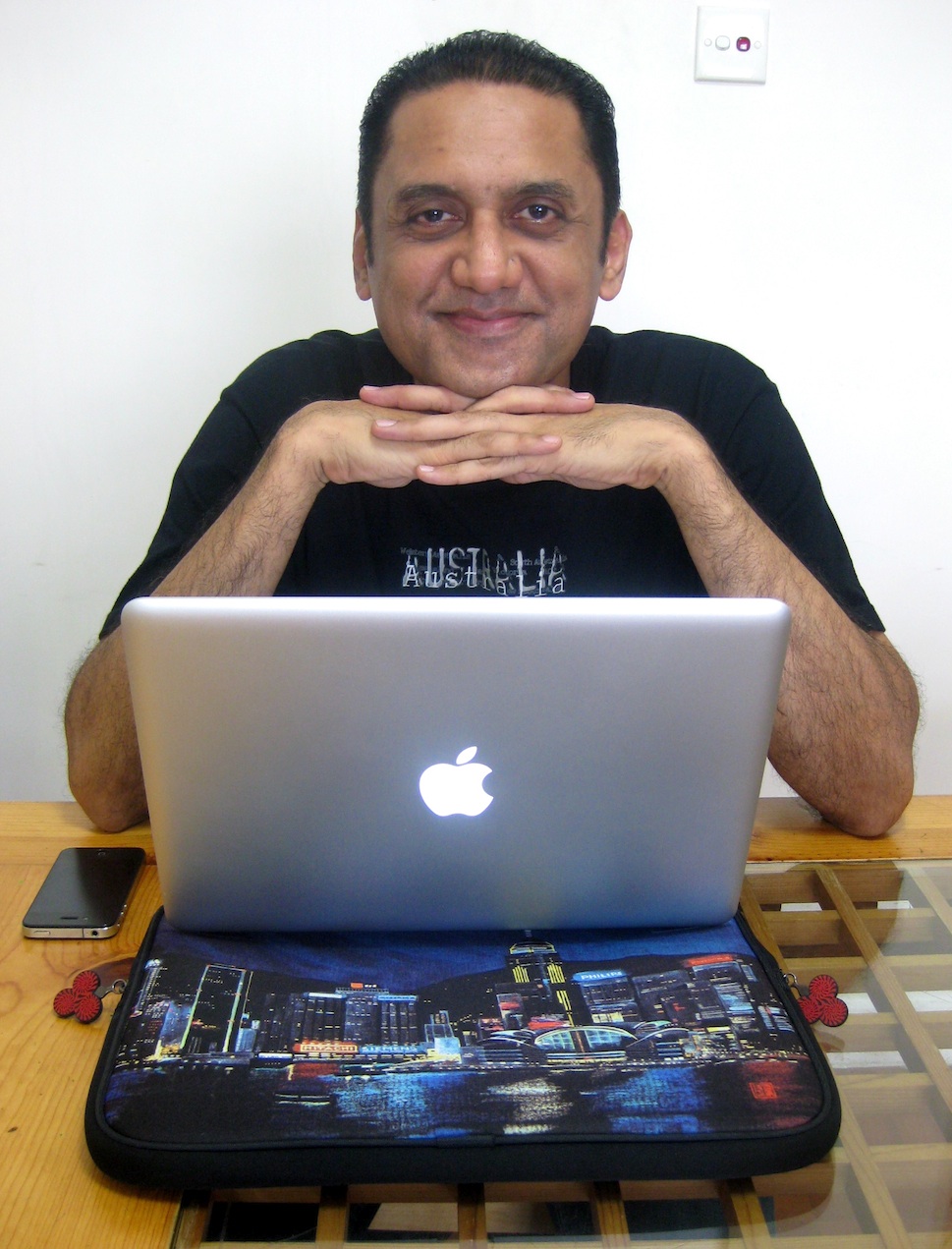
[Photo taken recently by Salma, while I was blogging during a weekend, in my usual corner of the dining table]

Life lesson from giraffes

I was fortunate to experience the African safari for a few days recently. Besides seeing the ‘big five’ and other wild animals up close, it was also a chance to see nature in its purest form. One of the bonuses was listening to the rangers sharing their knowledge about the animals and experiences in the wild. One of the most amazing narratives that I heard was about the birth of a baby giraffe. I didn’t quite believe it so I checked out the facts online before posting this. Here’s the story…

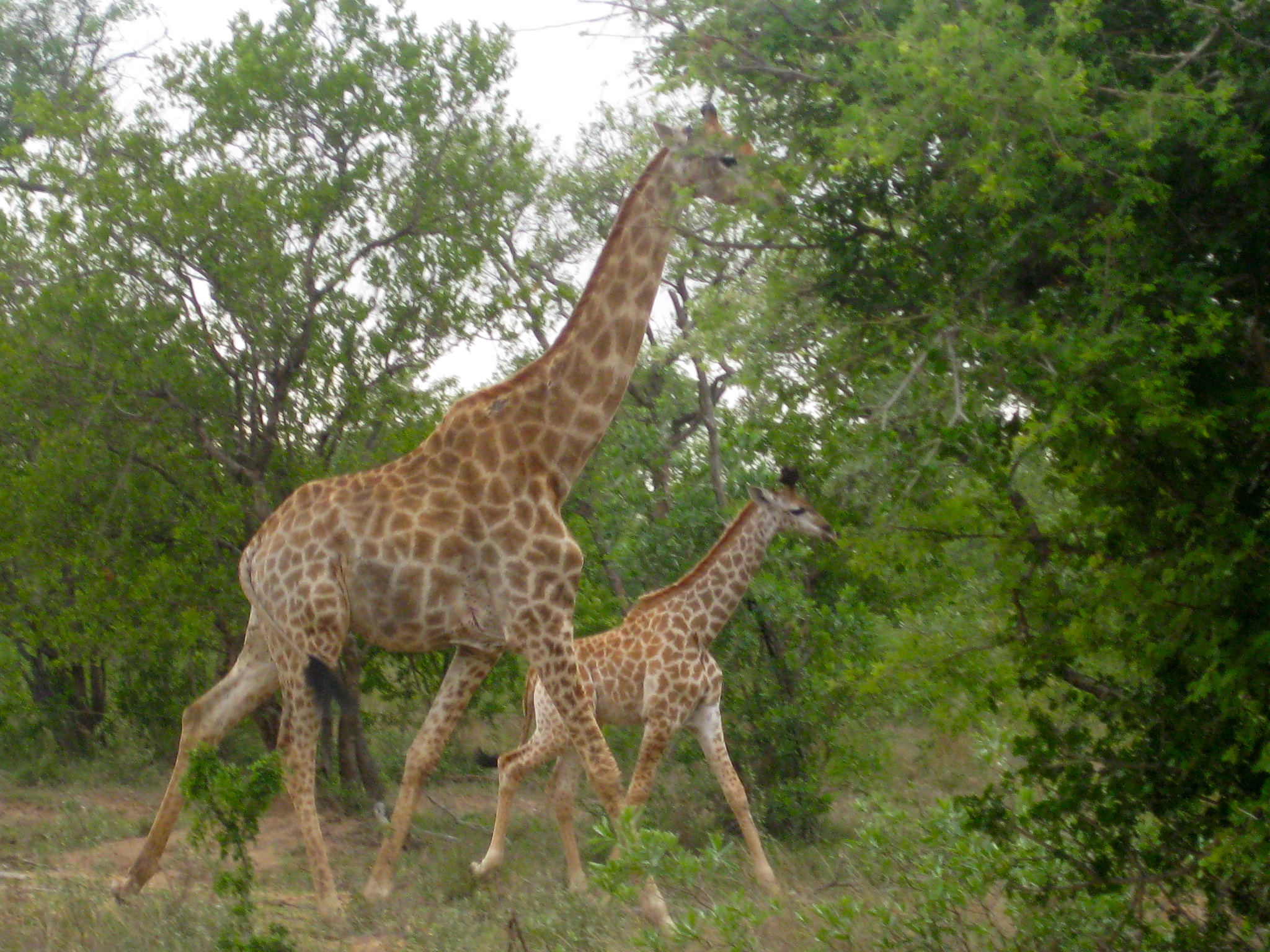
The bay giraffe falls into this world from eight feet above the ground. The mother giraffe lowers her neck and smooches the baby. Within minutes the baby starts to struggle to get up on its feet. It falls down a few times, but doesn’t give up until it is firmly on its feet, and then it starts walking around. Very often, if the baby doesn’t start struggling to get up, or if the baby gives up after falling down and lies still, the mother would kick it with her long leg that would send the baby flying up in the air and tumbling down on the ground. As the baby lies curled up, the mother kicks the baby again. And this goes on until the baby, still trembling and tired, learns to stand on its feet. Mama giraffe is delighted to see the baby on its feet and walking!

Why does the mother giraffe do that? Because the lions, leopards and hyenas love giraffe meat. And unless the bay giraffe quickly learns to stand and run with the pack, it will have no chance of survival. Most of us though are not quite as lucky as the baby giraffes. When we fail, when we are down, we often stay there. Nobody kicks us out of our comfort zone, to remind us to get back on our feet, to survive and succeed. It’s also an important lesson for the parents.

[Photo of a giraffe and baby in South African wild. Some more good ones here.]

Louie Schwartzberg: Nature. Beauty. Gratitude.

10 Inspiring Quotes by Super Achievers

“I struggled just getting the ball up to the rim level. I couldn’t do it at first.” (Kareem Abdul Jabbar – basketball champion)

“What could be worse than getting to the end of your life and realizing you hadn’t lived it.” (Edward Albee – 3 Pulitzer Prizes for Drama)

“If you don’t fall down, you are not trying hard enough.” (Tenley Albright – Olympic Gold Medal Figure Skater and Surgeon)

“I believe that each of us comes from the Creator trailing wisps of glory.” (Maya Angelou – Poet and Historian)

“I knew that if I failed I wouldn’t regret that, but I knew the one thing I would regret is not trying.” (Jeff Bezos – Founder of Amazon.com)

“I do not know the word ‘quit’. Either I never did, or I have abolished it.” (Susan Butcher – Champion dog-sled racer)

“There is no such thing as an average human being. If you have a normal brain, you are superior.” (Benjamin Carson – Pediatric Neurosurgeon)

“I have always felt that I did well as a student because I lacked confidence.” (Denton Cooley – pioneer of heart transplants)

“The Godfather was a very under-appreciated movie when we were making it. I almost got fired.” (Francis Ford Coppola – filmmaker, producer and screenwriter)

“My parents telling me to stop doing it is probably what caused the company to be created.” (Michael Dell – Founder of Dell)

Selected from Academy of Achievement – one of my favorite inspiration sites.

[Photo taken in Hong Kong during MacLehose 6-7 and the ‘Needle Hill’ climb]

Inspiration from traveling…

This is a re-post from March 2010 – Three life lessons from traveling:

Many frequent travelers learn a few ‘tricks of the trade’ and develop certain attitudes that help them deal with the stress of traveling and keep sane. I believe some of these provide useful lessons for life:

  1. Travel light. It’s perhaps the most important advice on traveling. Packing a smaller bag requires planning, discipline and focus on the essentials. It saves time at check-in counters. It’s easier to unpack. Less clutter means better focus, and fewer chances of leaving something behind. You can also move on at short notice. Doesn’t that apply to life too? Whether it’s your desk/desktop, wallet/purse/bag, wardrobe or the house… fewer things mean less clutter, less time wasted on finding stuff, less energy on the maintenance. The same applies to having thousands of ‘friends’ on Facebook, receiving tons of junk mail, maintaining dozens of credit cards… the list goes on. Less is more; lighter the better; quality over quantity.
  2. Be prepared for surprises. You learn during traveling that everything is not in your control, and things don’t always go as planned. Flights can be delayed or cancelled; your special meal onboard is often mixed up; bags don’t always make the connection; hotels can be over-booked; Internet doesn’t always work… And it’s not because the world is conspiring against you and everyone is out to get you. You can accept these situations with calm or fight and argue and get upset. I often remind upset fellow passengers: There are usually three reasons for a flight to be delayed: there’s something wrong with the plane, or the pilot, or the weather. And I am glad they have found out while we are still on the ground. The same applies to life. Despite great intentions and excellent planning, things do go wrong. And we have to learn to distinguish between situations (that can’t be changed) and problems (that can be solved). Unfortunately, so many people waste so much of their time and energy fighting with situations.
  3. Enjoy the moment. Just like the unpleasant surprises, Continue reading

Steve Jobs: How to live before you die

Check out Mush’s photosvideos and Facebook page

5 inspiring quotes by Steve Jobs

“We don’t get a chance to do that many things, and every one should be really excellent. Life is brief, and then you die, you know? And we’ve all chosen to do this with our lives. So it better be damn good. It better be worth it.” (Fortune)

“Do you want to spend the rest of your life selling sugared water or do you want a chance to change the world?” (Macstories.net)

“You can’t connect the dots looking forward; you can only connect them looking backwards. So you have to trust that the dots will somehow connect in your future. You have to trust in something – your gut, destiny, life, karma, whatever. This approach has never let me down, and it has made all the difference in my life.” (Stanford University commencement address, June 2005)

“Being the richest man in the cemetery doesn’t matter to me. Going to bed at night saying we’ve done something wonderful … that’s what matters to me.” (Wall Street Journal 1993, shared by UK Guardian)

“Here’s to the crazy ones, the misfits, the rebels, the troublemakers, the round pegs in the square hole; the ones who see things differently; they’re not fond of rules. You can quote them, disagree with them, glorify or vilify them, but the only thing you can’t do is ignore them because they change things… they push the human race forward, and while some may see them as the crazy ones, we see genius, because the ones who are crazy enough to think that they can change the world, are the ones who do.” (Think Different, narrated by Steve Jobs)

Check out Mush’s photosvideos and Facebook page

4 reasons why we don’t achieve our goals

[A repost from Sep 2010] I have wondered about these questions for many years: Why most people can’t fulfill their dreams? Why most goals are not achieved? Why most plans don’t work out? Why so much action doesn’t produce the desired results?

Working with thousands of salespeople and sales managers for over 20 years, I have learnt that there are only four reasons. Whether it’s about your career, health, money, relationships or any other goals that we fall short of, it is because:

  1. We don’t really want it. Whatever ‘it’ is that we are after. Are we having sleepless nights thinking and planning for it? What if we don’t get it? Will we settle without it? Do we have a specific time frame in mind? These questions can help us determine if we really want something badly enough. Otherwise, it’s not even a goal – just one of those wishes which may or may not be fulfilled. And we will be OK either way.
  2. We don’t believe it’s possible. It’s an inner voice that tells us, we can’t do it. ‘I can never lose so much weight.’ ‘I don’t think I am made for this.’ ‘It’s just not worth it.’ We believe we don’t have what it takes – the talent or opportunity or whatever.
  3. We don’t know how. We don’t have the knowledge or the skills required to achieve the goal, and worse still, we don’t even know that. Like the salesperson who doesn’t put in the time and effort to learn the product or the skills. Or like someone who spends an hour working out every day without knowing the basics of fitness or nutrition.
  4. We aren’t willing to pay the price. In other words, we don’t take any action towards our goal. We get lazy; we procrastinate. As someone said, ‘If you are only interested, you will do what’s convenient. If you are committed, you will do whatever it takes!’

Do you know of any other reasons? Knowing what’s holding us back is a big first step towards achievement of our goals.

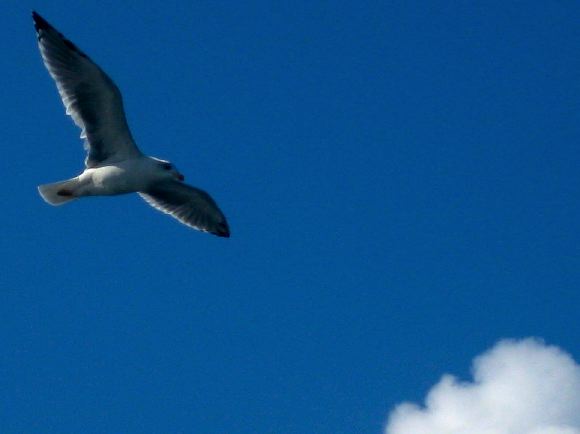
[Photo taken recently of a seagull searching for fish]

Two main reasons we procrastinate…

I had been putting off writing this piece for two days. Procrastination is a very strange phenomenon. We know something must be done now, but we delay it. It can be a phone call to mom, an email to a customer, a report to the boss, getting up on time, making an important decision, ending a bad habit, starting a good one, saying some nice words, apologizing for a mistake, it can be small tasks or big projects… but we often delay it despite expecting to be worse off due to the delay. We know that procrastination can cost us money, health, relationships, productivity or social disapproval for not meeting responsibilities or commitments… but we procrastinate. Procrastination is not always inaction. Very often, we get busy with less important or less urgent tasks to avoid the high-priority actions. Few reasons why we procrastinate, and some ideas on what to do about it:

  1. Lack of passion. Sometimes the important and urgent task is too boring. I can’t get passionate about sorting through the physical mail, paying the bills (though online), filing the receipts and so on. So here’s what I did. Firstly, I scheduled this task for Sunday mornings, so the pile of envelopes doesn’t bother me all week. Secondly, I systematically unsubscribed from many mailing lists. That required some time over the phone and some emails, but it was worthwhile. I also put as many bills as possible on auto-pay. Now I have a much smaller pile to deal with every Sunday morning. The idea is to get rid of, or minimize the unpleasant tasks in your life. Sometimes you can trade boring tasks with colleagues or members of the family. I’ll do your Powerpoint presentation; you do my Excel report. I’ll edit the photos; you do the filing. At home, I take care of all IT stuff; Salma looks after mechanical issues. I am responsible for all issues with schools and education; she looks after all the shopping and food. I do the paper work; she checks credit card statements…and so on.
  2. Lack of skill. Very often, we put things off because we are not good at them, or we just don’t know how to do them. The obvious way to deal with this is to learn. I knew somebody who dreaded the monthly reports because she wasn’t good at Excel. She used to make mistakes and feel stressed. So obviously, she would put it off until the very last minute, which would make it even worse. Until one day, she figured she had to learn it and get good at it. Once the stress of making mistakes and the fear of failure was gone, the task wasn’t as dreadful and the procrastination was also gone. Why do you think most salespeople procrastinate calling up the upset customer, or delay in resolving any conflicts, or put off the diet plan – because they are not good at these things and there’s a fear of failure.

Happy to add a very useful guide on beating procrastination by a fellow blogger. It’s very detailed, comprehensive and full of useful tips.

[A recent photo of sunset through a window – one of those things that can’t wait.]

Adrenaline, determination, courage, insanity…

What do you think?

The good news – by Thich Nhat Hanh

An excerpt from Call Me by My True Names by the modern Buddhist poet, Thich Nhat Hanh:

They don’t publish the good news.
The good news is published by us.
We have a special edition every moment, and we need you to read it.
The good news is that you are alive, and the linden tree is still there, standing firm in the harsh Winter.
The good news is that you have wonderful eyes to touch the blue sky.
The good news is that your child is there before you, and your arms are available: hugging is possible.
They only print what is wrong.
Look at each of our special editions.
We always offer the things that are not wrong.
We want you to benefit from them and help protect them.
The dandelion is there by the sidewalk, smiling its wondrous smile, singing the song of eternity.
Listen! You have ears that can hear it. Bow your head. Listen to it.
Leave behind the world of sorrow and preoccupation and get free.
The latest good news is that you can do it.

[Photo by yours truly. Do you have any good news to share?]

10 health benefits of fasting

The 2009 article on health benefits of fasting, continues to be one of the most popular posts on this blog with almost 5,000 views. And most of these come through Google search, suggesting there’s a lot of interest in the subject. Here is a slightly edited version:

Fasting is the act of willingly abstaining from some or all food, drink, or both, for a period of time. Almost every expert in medicine, heath and nutrition has written something about the benefits of fasting. Here’s a summary:

  • Fasting promotes detoxification. As the body breaks down its fat reserves, it mobilizes and eliminates stored toxins.
  • Fasting gives the digestive system a much-needed rest. After fasting, both digestion and elimination are invigorated.
  • Fasting promotes the resolution of inflammatory processes, such as in rheumatoid arthritis.
  • Fasting quiets allergic reactions, including asthma and hay fever.
  • Fasting promotes the drying up of abnormal fluid accumulations, such as edema in the ankles and legs, and swelling in the abdomen.
  • Fasting corrects high blood pressure without drugs. Fasting will normalize blood pressure in the vast majority of cases.
  • Fasting makes it easy to overcome bad habits and addictions. Fasting rapidly dissipates the craving for nicotine, alcohol, caffeine and other drugs.
  • Fasting clears the skin and whitens the eyes. It is common to see skin eruptions clear while fasting, and the whites of the eyes never look so bright as they do after fasting.
  • Fasting restores taste appreciation for wholesome natural foods. People say that their taste buds come alive after fasting and that food never tasted so good.
  • Fasting initiates rapid weight loss with little or no hunger. Most people are surprised at how little desire for food they have while fasting.

Besides the above health benefits, fasting is also an excellent training in self discipline and will power. Successful fasting for a period of time can provide motivation to carry on a healthy diet. Will you try it?

[Millions of Muslims around the world are starting their fasting month, called Ramadhan. We would abstain from all food and drinks from dawn to dusk every day for thirty days! Many break their fast with dates.]

The power of commitment

“When you are interested, you do what’s convenient. When you are committed, you do whatever it takes.” 

This post is inspired by someone I met today in Colombo. When he decided to move back to Sri Lanka from the Middle East 15 years ago, his wife wasn’t too happy with the decision. She loved Dubai too much. This man promised his wife that he’ll bring her to Dubai for at least ten days every year. And he hasn’t missed a year since. He told me it was difficult at times to take the ten days off because of work pressure, or other priorities, ‘but a promise is a promise’. 

How often do we sabotage our relationships, health, productivity, talent, dreams… by not fulfilling the commitments that we make to ourselves or others. Whether big or small, every broken promise adds up to create an unhappy situation. Some of the most commonly broken promises I can think of:

  • To our loved ones: I’ll call you back in a minute. I’ll do it during the weekend. I’ll be there for the… (birthday party or the game or the parent-teacher meeting). We’ll take a vacation this year.
  • To our kids: We’ll read it tonight. Yes, I’ll help with your math. I’ll fix it tomorrow. We’ll go there during the weekend.
  • At work: I am working on it. I’ll email you today. I’ll clean up my desk. I’ll call you back. I’ll learn the new… (skill, system, program, equipment) soon.
  • To ourselves: I’ll start exercising. I’ll read that book. I’ll eat healthy. I’m off desserts. I quit coffee. I’ll wake up earlier. I’ll clean up. I’ll volunteer. I’ll start saving.

And I am as guilty as anybody else. Let’s promise to keep our promises. And commit to fulfill our commitments.

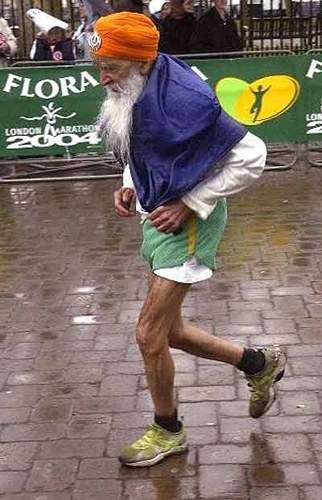
[Photo of Fauja Singh, the 100-year old runner. See the story here]

Check out Mush’s photosvideos and Facebook page

Five benefits of waking up earlier…

Morning Calm

[A re-post from June 2009] Most people seem to start their day in a rush – rushing to get ready, rushing with the breakfast, rushing to work. These people often spend their entire day in a rush, playing catch-up with the rest of the world. This can be easily avoided by getting up a little earlier. There are many other benefits of getting up early, but I will list the five that have always worked for me:

  1. Gratefulness. It’s difficult to be grateful for the moment when you are getting late for work. But if you don’t have to rush, you can enjoy every moment. And be grateful for being alive today, for the health you have, for the comforts of your home, for the family you have, for the food you eat, for the work you do…
  2. Bonus Hour. Most of us complain of not having enough time for the things we want to do e.g. exercise, reading, or pursuing other interests and ambitions like learning a language, writing a book, starting a blog. The easiest way to achieve these is by giving yourself 30 minutes or an hour of bonus time in the morning.
  3. Quiet Time. There’s something special about the calm of the morning – no sounds from TV, kids, phones or traffic. There’s also less clutter in your mind which allows you to think and concentrate better. Any brain work that takes hours during the day can sometimes be achieved in half the time if done early morning.
  4. Beat the Rush. Your commute time will cut down if you leave home before the rush hour. You’ll spend less time queuing up for elevators. You’ll have to get used to the emptiness – at the gym or pool, on the road, in the train, at the office… everywhere.
  5. Get Ahead. Getting to work half an hour before everybody else gives you time to plan, prioritize and organize. Less distractions of the phone, email and people can allow you to focus better on the most important tasks of the day. You get more done, and leave on time, again beating the rush hour.

Even if you work from home, there’s plenty of reason to start the day before everyone else does. And if you are a housewife, who usually spends the day taking care of others, this could be your time, to do the things just for yourself! Please share your comments and tips.

[Check out Mush’s photos, videos and Facebook page]

Inspiring quotes about Change

“If there’s no difference between your tomorrow and today, you are as good as dead.” (Imam Ali AS)

“Be the change you want to see in the world.” (Mahatma Gandhi)

“God, grant me the serenity to accept the things I cannot change, the courage to change the things I can, and the wisdom to know the difference.” (Reinhold Niebuhr)

“Nobody can go back and start a new beginning, but anyone can start today and make a new ending.” (Maria Robinson)

“For everything you have missed, you have gained something else, and for everything you gain, you lose something else.” (Ralph Waldo Emerson)

“Growth mean change and change involves risk, stepping from the known to the unknown.”

“When you are finished changing, you are finished.” (Benjamin Franklin)

“When we least expect it, life sets us a challenge to test our courage and the willingness to change. At such a moment, there’s no point in pretending that nothing has happened or in saying that we are not ready.” (Paolo Coelho)

“Life is too short to try and change others.” (yours truly)

[Photo of Danxia Peaks in ShaoGuan, China – taken yesterday]

Ron Gutman: The hidden power of smiling

Ron Gutman reviews a raft of studies about smiling, and reveals some surprising results. Did you know your smile can be a predictor of how long you’ll live – and that a simple smile has a measurable effect on your overall well-being? Prepare to flex a few facial muscles as you learn more about this evolutionarily contagious behavior.