Michael Norton: Money can buy happiness

Another excellent TED talk in which Michael shares a simple way to buy happiness – by giving…

Michael I. Norton is an Associate Professor of Business Administration in the Marketing Unit and Marvin Bower Fellow at the Harvard Business School. He holds a B.A. in Psychology and English from Williams and a Ph.D. in Psychology from Princeton. Prior to joining HBS, Professor Norton was a Fellow at the MIT Media Lab and MIT’s Sloan School of Management. His work has been published in a number of leading academic journals, including Science, the Journal of Personality and Social PsychologyPsychological Science, and the Annual Review of Psychology, and has been covered in media outlets such as the Economist, the Financial Times, the New York Times, the Wall Street Journal, and the Washington Post.

Inspiration from a 66-year old graduating!

Trevor Lunn has been one of my biggest mentors, greatest inspirations and best friends ever since I first met him in 1989. Trevor has achieved many amazing things in life… and now he has graduated at the age of 66!

Trevor studied medicine when he was a youngster, but life events, such as marriage and kids, and the pressure of earning a living for the family, intervened, and he did not finish his medicine degree. He regretted that ever since. So when he retired and moved to Melbourne, he decided to go back to university and enrolled with Deakin University as a full-time student to study health science. As a mature age undergrad (probably the most matured on record), he put in extra efforts and achieved exceptional results. In the three years of studying, he got high distinctions in almost all subjects and numerous awards for being top of the class.

And finally, his dream just came true – he graduated with distinction and wore a mortar board on his head. He had self doubts about his ability to do a degree at this age. But apart from the strong desire of self-actualisation, he also wanted to set an example to his kids and grandkids – that if you put your mind to it, you’ll achieve great results despite the odds.

[Thanks to Priscilla Lunn for helping with the story. Here’s another piece I had written about Trevor when he was retiring in 2009.]

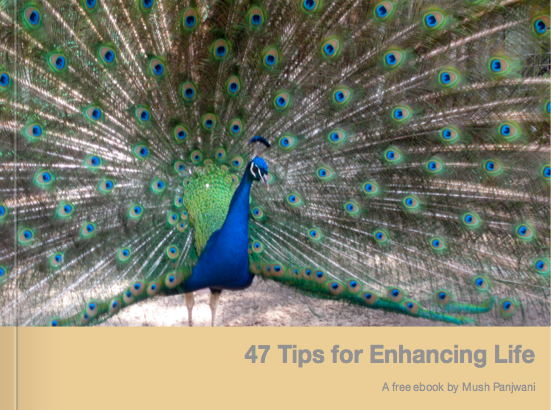
Free ebook: 47 Tips for Enhancing Life

Today (April 12) I turn 47 years old. It amazes me that I’ve been around that long. I feel like I’ve barely begun. As always, it’s an opportunity to reflect on what I’ve achieved, what I’ve learnt, and where do I want to be in five or ten years from now.

Through this photo book, I am sharing 47 tips on happiness, health, relationships and productivity – all of which can enhance life. The photos used in the book are from my personal collection. You can download the book by clicking on the book cover, or from this link. If you find this useful, please share with others too. I will consider that your birthday gift to me.

Book Recommendation: Steve Jobs by Walter Isaacson

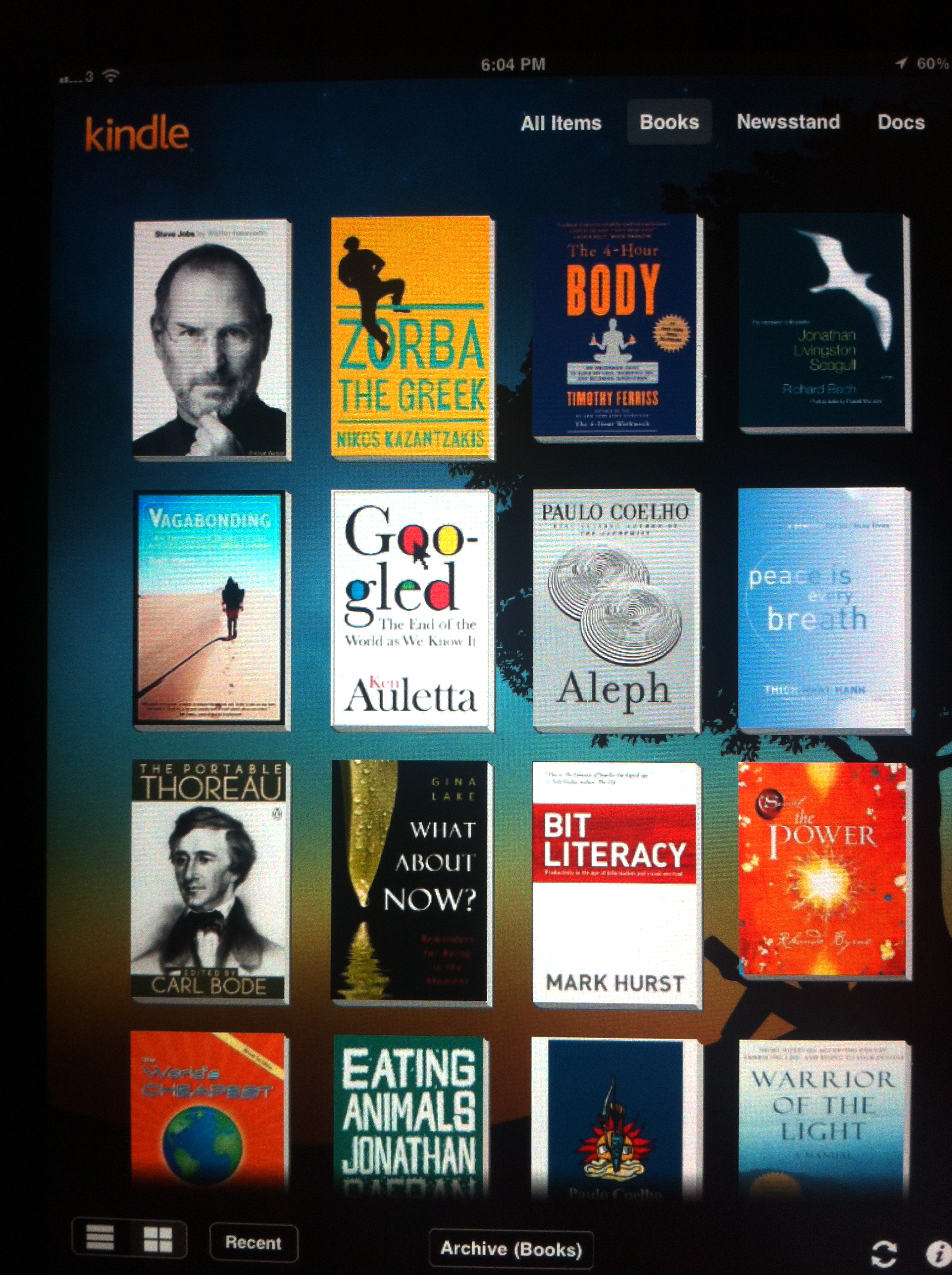
Current books on my iPad

I just finished reading this wonderful biography of Steve Jobs, and recommend this to anyone interested in leadership, management, business, marketing, sales, creativity, design… or just general inspiration about making the best of life. Here’s one of my favorite pieces from the book about Steve’s popular ‘reality distortion field’:

A lot of people distort reality, of course. When Jobs did so, it was often a tactic for accomplishing something. Wozniak… marveled at how effective it could be. “His reality distortion is when he has an illogical vision of the future, such as telling me that I could design the Breakout game in just a few days. You realize that it can’t be true, but he somehow makes it true.”

When members of the Mac team got ensnared in his reality distortion field, they were almost hypnotized. “He reminded me of Rasputin,” said Debi Coleman. “He laser-beamed in on you and didn’t blink. It didn’t matter if he was serving purple Kool-Aid. You drank it.” But like Wozniak, she believed that the reality distortion field was empowering: It enabled Jobs to inspire his team to change the course of computer history with a fraction of the resources of Xerox or IBM. “It was a self-fulfilling distortion,” she claimed. “You did the impossible, because you didn’t realize it was impossible.”

Here’s the link to order the digital, hard copy or audio version from Amazon. Any other great books you’d like to recommend?

8 Happiness Facts

I just read these interesting facts on Action for Happiness site:

  1. Our happiness is not set in stone: Although our genes influence about 50% of the variation in our personal happiness, our circumstances (like income and environment) affect only about 10%. As much as 40% is accounted for by our daily activities and the conscious choices we make. So the good news is that our actions really can make a difference.
  2. Optimism helps us achieve our goals: Research shows that people who are optimistic tend to be happier, healthier and cope better in tough times.
  3. Positive emotions make us more resilient: Our emotions affect our long-term well-being. Research shows that experiencing positive emotions in a 3-to-1 ratio with negative ones leads to a tipping point beyond which we naturally become more resilient to adversity and better able to achieve things.
  4. Happiness is contagious: Our happiness influences the people we know and the people they know. Research shows that the happiness of a close contact increases the chance of being happy by 15%. The happiness of a 2nd-degree contact (e.g. friend’s spouse) increases it by 10% and the happiness of a 3rd-degree contact (e.g. friend of a friend of a friend) by 6%. [Related post]
  5. Together we’re stronger: Having a network of social connections or high levels of social support has been shown to increase our immunity to infection, lower our risk of heart disease and reduce mental decline as we get older. Not having close personal ties has been shown to pose significant risks for our health.
  6. Happier people live longer: Happiness doesn’t just feel good. A review of hundreds of studies has found compelling evidence that happier people have better overall health and live longer than their less happy peers. Anxiety, depression, pessimism and a lack of enjoyment of daily activities have all been found to be associated with higher rates of disease and shorter life spans. [Related TED video]
  7. Happiness is a skill you can learn: Western neuroscience has now confirmed what Eastern wisdom has known for a long time: happiness is a skill we can learn. Research shows that happiness, compassion and kindness are the products of skills that can be learned and enhanced through training, thanks to the neuro plasticity of our brains.
  8. Happiness leads to success: Most people think that if they become successful, then they’ll be happy. But recent discoveries in psychology and neuroscience show that this formula is backward: Happiness fuels success, not the other way around. When we’re positive, our brains are more motivated, engaged, creative, energetic, resilient, and productive.

I was a bit surprised to read about genes contributing up to 50% of our happiness, and have started reading some more about it, but the rest of the facts seem to support most of my views and other posts about happiness. What’s your take on the above?

What does your profession demand?

I met a fat doctor. Though I don’t like to judge people by their appearances, I wouldn’t quite trust him with my own health and well-being. What will be your first impression when you see…

  • A dentist with bad teeth?
  • A tailor in shabby clothes?
  • A teacher who doesn’t like kids?
  • A beautician who is less than beautiful?
  • A manager who is not organized?
  • An educationist who doesn’t like to read?
  • A banker or financial expert with no money?
  • A motivational trainer who gets depressed easily?
  • A salesperson who doesn’t use her own products, or worse still, uses competitive products?

These are examples of people who are in the wrong jobs/business; who don’t believe in what they do; who don’t practice what they preach. Every profession comes with certain demands and responsibilities, fulfilling which results in success and happiness. And so does every relationship. As a spouse, we must find the time for our partner. As parents, we have to be the role models. As friends we have to be there. And what about our responsibilities towards the community, towards our fellow human beings and towards the world we live in?

“It’s easy to dodge our responsibilities, but we cannot dodge the consequences of dodging our responsibilities.”

The best tips on productivity, motivation and dealing with depression

I recently had the privilege of connecting and interacting with one of the happiest and most successful people I’ve ever known. He started as a salesman and built one of the biggest direct sales companies in the region. I always admired how he found time for leisure and everything else that he enjoyed doing, even during the busiest times of his business. He retired early and rich, while the company runs on the systems he had built. In the following note, he shared with me his thoughts on motivation, productivity and dealing with depression:

Books: Two books that helped me greatly are:

  1. How I Found Freedom in an Unfree World by Harry Browne
  2. The Happiness Purpose by Edward De Bono

And my favorite now for ageless wisdom is The Portable Thoreau edited Carl Bode.

Work Habits: 

  • Keep a ‘time diary’ for 10-30 days. Log everything you do from wake-up to sleep – every phone call, every meeting, every cup of coffee. Review and you will find there is much wasted and unproductive time, which could be spent constructively on work or quality leisure. Make the adjustments.
  • Do jobs IMMEDIATELY and FINISH them.

By doing these two things I accomplished the same in one third of the time than most people! Now I am stress-free and have lots of leisure. Continue reading

Diana Nyad: precious life, extreme dreams, accepting defeat…

In the 1970s, Diana Nyad set long-distance swim records that are still unbroken. Thirty years later, at 60, she attempted her longest swim yet, from Cuba to Florida. She talks about how to prepare mentally to achieve an extreme dream, and asks: What will YOU do with your wild, precious life? Extremely inspiring!

Less stuff = more happiness

I’ve lived with this mantra for over five years now, so I was obviously very interested to watch Graham Hill’s talk on TED with that title. He has summarized the benefits very well, but he doesn’t tell us what did he do with all his collections, possessions and stuff. Here’s my story and tips:

When I started the process of reducing my possessions and simplifying my life, I started with the biggest chunk – my collection of books. I realized I wasn’t going to re-read most of them. My hope that my kids would read them all one day wasn’t realistic because they don’t have the same interests as mine. So I gave them all away to friends or charity. I also got rid of the book shelf, so that the books I continue to buy must be given away soon after I finish reading them. Since the iPad, I only buy digital books. They are cheaper, easy to store/backup and environment friendly. You can increase the font size and brightness; you can highlight passages; you can call up a dictionary by just touching the word. And if you really miss the touch and feel and smell of real books, you can visit the book store once a while and get all that for free. I have also tried audio books, and they have their benefits too.

Then I was able to simplify my entire wardrobe to fit into ten hangers and one drawer – plus a small suitcase with winter stuff on one side and special occasion stuff on the other. I took most of the unnecessary clutter out of my life – excessive suits, shoes, belts, ties, watches (I’ve actually stopped wearing a watch), videos, CDs etc. I still need to finish scanning the photos and get rid of the albums. All of this means, I need less space for my possessions and less maintenance time. I can focus on quality instead of quantity/variety. I only buy things that I really need and have space for. If I buy a new shirt, an old shirt has to go.

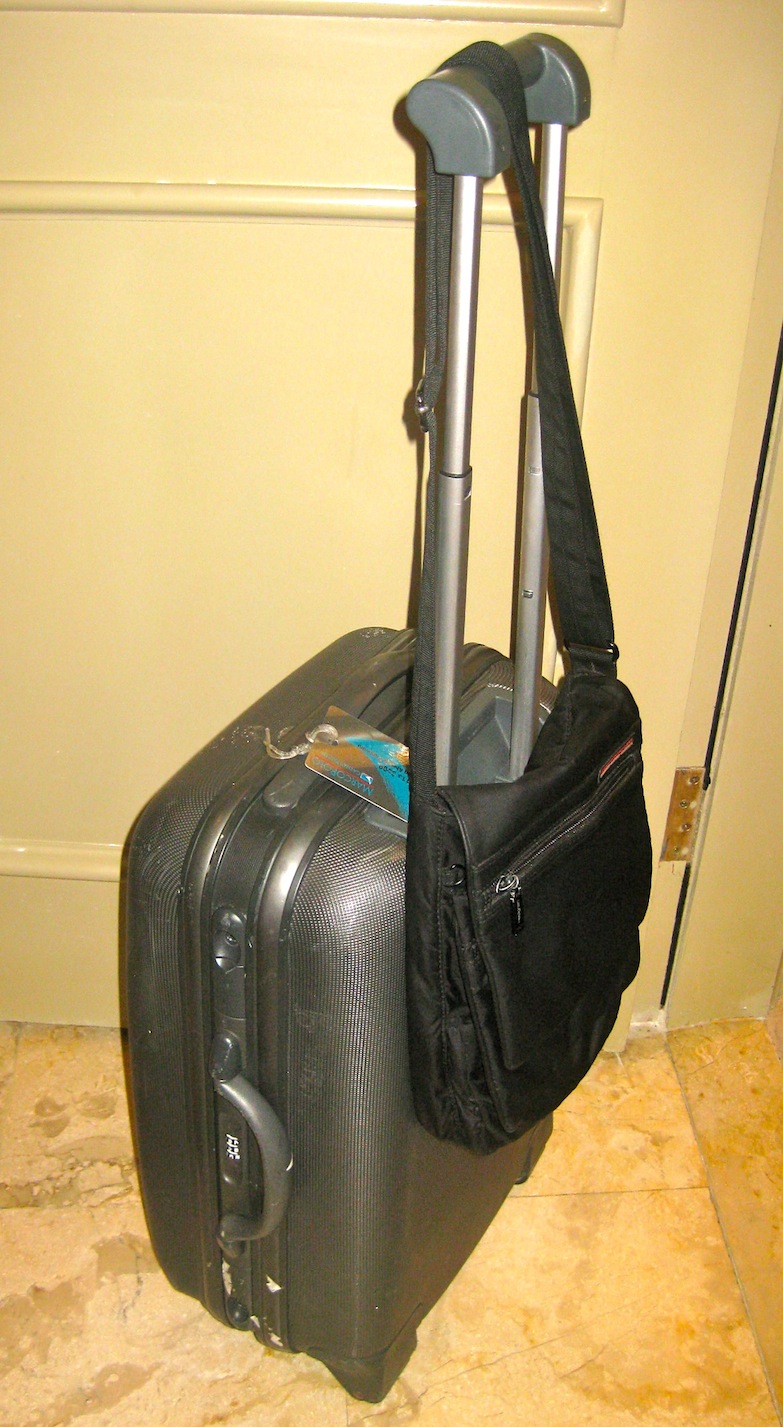
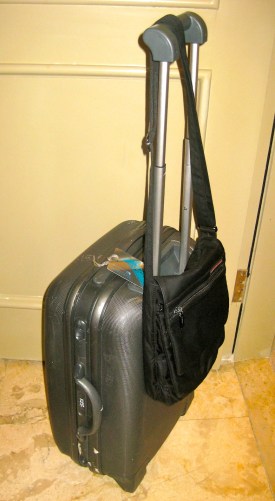
My travel bag has got smaller and smaller, regardless of the length of the trip, and is now down to a small carry-on, without the additional backpack that used to go with it. I still take all the photos and make all the movies with my pocket Canon Ixus. That means I can pack easily and quickly, travel much lighter and move around easily. I have applied the same principle to my work i.e. office space and desk. It’s all easier said than done, but extremely rewarding and worthwhile. I believe it makes you more productive, more efficient, lighter and happier!

[Photo of my travel bags taken just now in the hotel room. The shoulder bag has the camera, spare battery, spare SD cards, phone, wallet, passport, charger, pens and few other essentials]

Another Year of Blogging and Enhancing Life

When I decided to start writing a book in 2009, a good friend* advised me to start a blog instead. That way people can read as I write it. The plan was to put together the book as soon as I had 100 posts/articles. I almost forgot about the plan and lost count of the posts until I saw the year-end report from WordPress.

Allow me a little bit of bragging: Thanks to all of you, my readers and subscribers, the number of views reached 48,000 in 2011 – up from 23,000 in 2010 and 16,000 in 2009! The current number of followers is an encouraging 298. There are 244 posts on the blog, and the most popular have been:

  1. How I lost 3 kg in 3 weeks (8,463 views)
  2. 11 Health Benefits of Fasting (7,154 views)
  3. 10 Inspiring Birthday Quotes (5,639 views)
  4. Does Rice Make you Fat? (2,278 views)
  5. 45 Tips for a Happy Marriage (1,201 views)
  6. 37 Things we Take for Granted Everyday (1,025 views)
Thank you, also for the wonderful feedback, comments and emails that encourage me to keep writing. As for the book, it was one of the few things on my 2011 to-do list that I didn’t do. But it’s back on my 2012 to-do list. Happy Reading in 2012, and please keep the comments coming.
* Thank you, Altaf, for the idea, encouragement and technical help to get me started with blogging!
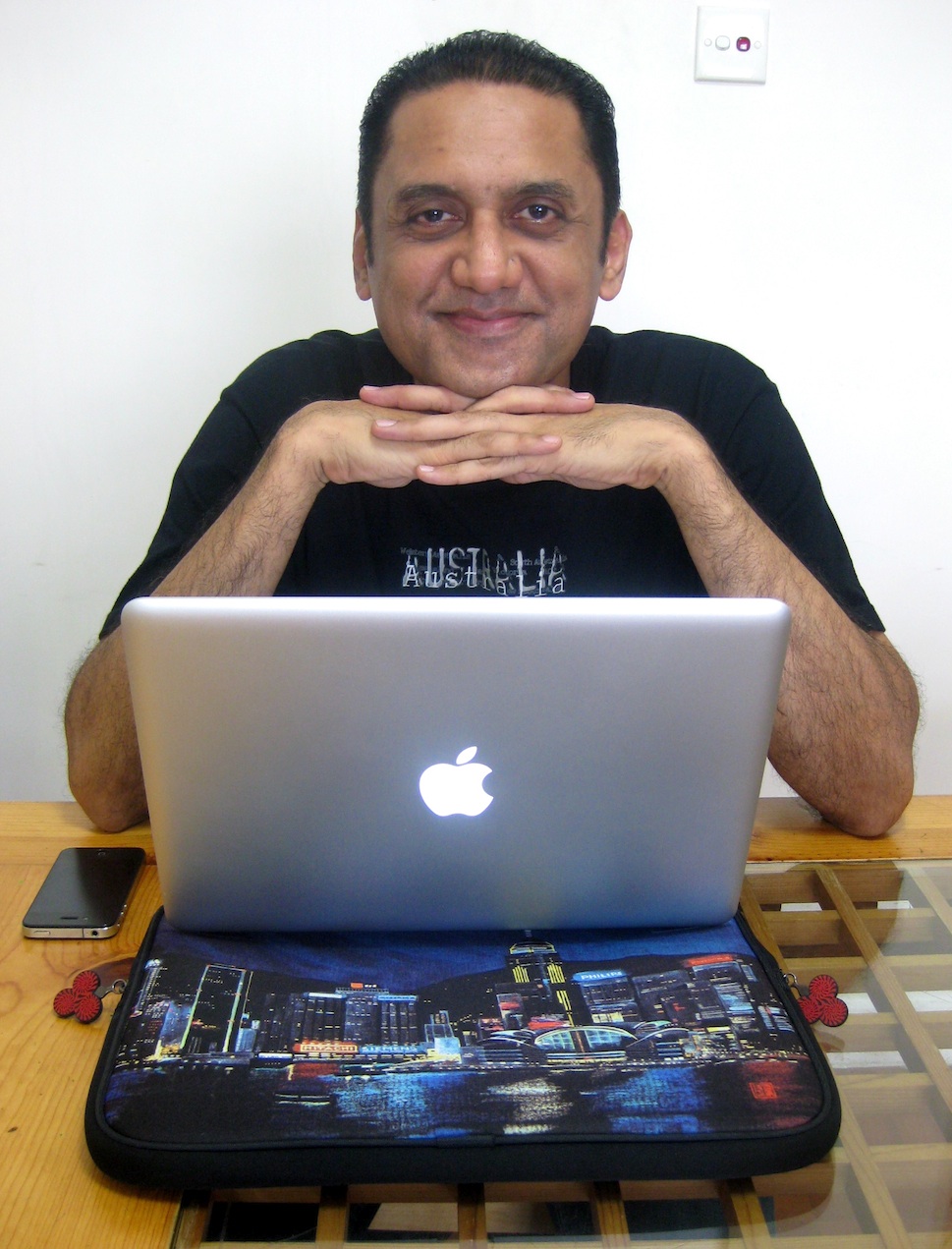
[Photo taken recently by Salma, while I was blogging during a weekend, in my usual corner of the dining table]

7 Reasons Why New Year Resolutions Don’t Work

A new day in Africa! (Sunrise at Hoedspruit, December 2011)

Most of the research suggests that majority of the people do not stick to their resolutions beyond a couple of weeks or months, if at all. And most of the goals established before the New Year end up way short of achievement. Having spent almost 30 years doing resolutions (a few times every year) and working with thousands of salespeople and managers who established annual goals, here’s what I think causes any New Year resolution to fail:

  1. Too casual. Some people come up with resolutions for the sake of resolutions, without giving serious consideration to what they really want.
  2. Not committed enough. Any resolution without total commitment is as good as a dream.
  3. Not specific enough. ‘I’ll lose weight’, ‘I’ll save money’, ‘I’ll travel’ are all examples of non-specific resolutions.
  4. No deadlines. Open-ended resolutions like ‘I’ll quit smoking’ are like any other promise without a time frame that we can easily postpone.
  5. No planning. A resolution without a plan is like a destination without a road map – without knowing how to get there.
  6. No follow-up. Milestones and checkpoints are critical in any journey. Resolutions that are not reviewed periodically often come to haunt us at the end of the year.
  7. No action. You know where you want to go, and how to get there, but you can’t there unless you start moving. Lack of action, laziness, and procrastination are often signs of lack of commitment.

If your resolutions haven’t worked well for you in the past, it’s likely because of one of the above reasons. This year, come up with fewer resolutions but make sure they are very specific, backed up with a full plan of action and have your total commitment. Then take the necessary action with perseverance, and review results often. In short, you need to know what you really want, by when and how… then act now!

Related reading:

Life lesson from giraffes

I was fortunate to experience the African safari for a few days recently. Besides seeing the ‘big five’ and other wild animals up close, it was also a chance to see nature in its purest form. One of the bonuses was listening to the rangers sharing their knowledge about the animals and experiences in the wild. One of the most amazing narratives that I heard was about the birth of a baby giraffe. I didn’t quite believe it so I checked out the facts online before posting this. Here’s the story…

The bay giraffe falls into this world from eight feet above the ground. The mother giraffe lowers her neck and smooches the baby. Within minutes the baby starts to struggle to get up on its feet. It falls down a few times, but doesn’t give up until it is firmly on its feet, and then it starts walking around. Very often, if the baby doesn’t start struggling to get up, or if the baby gives up after falling down and lies still, the mother would kick it with her long leg that would send the baby flying up in the air and tumbling down on the ground. As the baby lies curled up, the mother kicks the baby again. And this goes on until the baby, still trembling and tired, learns to stand on its feet. Mama giraffe is delighted to see the baby on its feet and walking!

Why does the mother giraffe do that? Because the lions, leopards and hyenas love giraffe meat. And unless the bay giraffe quickly learns to stand and run with the pack, it will have no chance of survival. Most of us though are not quite as lucky as the baby giraffes. When we fail, when we are down, we often stay there. Nobody kicks us out of our comfort zone, to remind us to get back on our feet, to survive and succeed. It’s also an important lesson for the parents.

[Photo of a giraffe and baby in South African wild. Some more good ones here.]

Louie Schwartzberg: Nature. Beauty. Gratitude.

10 Inspiring Quotes by Super Achievers

“I struggled just getting the ball up to the rim level. I couldn’t do it at first.” (Kareem Abdul Jabbar – basketball champion)

“What could be worse than getting to the end of your life and realizing you hadn’t lived it.” (Edward Albee – 3 Pulitzer Prizes for Drama)

“If you don’t fall down, you are not trying hard enough.” (Tenley Albright – Olympic Gold Medal Figure Skater and Surgeon)

“I believe that each of us comes from the Creator trailing wisps of glory.” (Maya Angelou – Poet and Historian)

“I knew that if I failed I wouldn’t regret that, but I knew the one thing I would regret is not trying.” (Jeff Bezos – Founder of Amazon.com)

“I do not know the word ‘quit’. Either I never did, or I have abolished it.” (Susan Butcher – Champion dog-sled racer)

“There is no such thing as an average human being. If you have a normal brain, you are superior.” (Benjamin Carson – Pediatric Neurosurgeon)

“I have always felt that I did well as a student because I lacked confidence.” (Denton Cooley – pioneer of heart transplants)

“The Godfather was a very under-appreciated movie when we were making it. I almost got fired.” (Francis Ford Coppola – filmmaker, producer and screenwriter)

“My parents telling me to stop doing it is probably what caused the company to be created.” (Michael Dell – Founder of Dell)

Selected from Academy of Achievement – one of my favorite inspiration sites.

[Photo taken in Hong Kong during MacLehose 6-7 and the ‘Needle Hill’ climb]

Inspiration from traveling…

This is a re-post from March 2010 – Three life lessons from traveling:

Many frequent travelers learn a few ‘tricks of the trade’ and develop certain attitudes that help them deal with the stress of traveling and keep sane. I believe some of these provide useful lessons for life:

  1. Travel light. It’s perhaps the most important advice on traveling. Packing a smaller bag requires planning, discipline and focus on the essentials. It saves time at check-in counters. It’s easier to unpack. Less clutter means better focus, and fewer chances of leaving something behind. You can also move on at short notice. Doesn’t that apply to life too? Whether it’s your desk/desktop, wallet/purse/bag, wardrobe or the house… fewer things mean less clutter, less time wasted on finding stuff, less energy on the maintenance. The same applies to having thousands of ‘friends’ on Facebook, receiving tons of junk mail, maintaining dozens of credit cards… the list goes on. Less is more; lighter the better; quality over quantity.
  2. Be prepared for surprises. You learn during traveling that everything is not in your control, and things don’t always go as planned. Flights can be delayed or cancelled; your special meal onboard is often mixed up; bags don’t always make the connection; hotels can be over-booked; Internet doesn’t always work… And it’s not because the world is conspiring against you and everyone is out to get you. You can accept these situations with calm or fight and argue and get upset. I often remind upset fellow passengers: There are usually three reasons for a flight to be delayed: there’s something wrong with the plane, or the pilot, or the weather. And I am glad they have found out while we are still on the ground. The same applies to life. Despite great intentions and excellent planning, things do go wrong. And we have to learn to distinguish between situations (that can’t be changed) and problems (that can be solved). Unfortunately, so many people waste so much of their time and energy fighting with situations.
  3. Enjoy the moment. Just like the unpleasant surprises, Continue reading

Steve Jobs: How to live before you die

Check out Mush’s photosvideos and Facebook page

Which are you?

…competent, inspiring, passionate, obsessed, provocative, impatient, hungry, driven, adoring, inspired, an artist, a genius, someone who cares…?

With all these remarkable, powerful, important options available to each of us, why do so many of us default to competent? (Seth Godin’s blog)

[Sunrise in South Africa – Sep. 2011]

5 inspiring quotes by Steve Jobs

“We don’t get a chance to do that many things, and every one should be really excellent. Life is brief, and then you die, you know? And we’ve all chosen to do this with our lives. So it better be damn good. It better be worth it.” (Fortune)

“Do you want to spend the rest of your life selling sugared water or do you want a chance to change the world?” (Macstories.net)

“You can’t connect the dots looking forward; you can only connect them looking backwards. So you have to trust that the dots will somehow connect in your future. You have to trust in something – your gut, destiny, life, karma, whatever. This approach has never let me down, and it has made all the difference in my life.” (Stanford University commencement address, June 2005)

“Being the richest man in the cemetery doesn’t matter to me. Going to bed at night saying we’ve done something wonderful … that’s what matters to me.” (Wall Street Journal 1993, shared by UK Guardian)

“Here’s to the crazy ones, the misfits, the rebels, the troublemakers, the round pegs in the square hole; the ones who see things differently; they’re not fond of rules. You can quote them, disagree with them, glorify or vilify them, but the only thing you can’t do is ignore them because they change things… they push the human race forward, and while some may see them as the crazy ones, we see genius, because the ones who are crazy enough to think that they can change the world, are the ones who do.” (Think Different, narrated by Steve Jobs)

Check out Mush’s photosvideos and Facebook page

4 reasons why we don’t achieve our goals

[A repost from Sep 2010] I have wondered about these questions for many years: Why most people can’t fulfill their dreams? Why most goals are not achieved? Why most plans don’t work out? Why so much action doesn’t produce the desired results?

Working with thousands of salespeople and sales managers for over 20 years, I have learnt that there are only four reasons. Whether it’s about your career, health, money, relationships or any other goals that we fall short of, it is because:

  1. We don’t really want it. Whatever ‘it’ is that we are after. Are we having sleepless nights thinking and planning for it? What if we don’t get it? Will we settle without it? Do we have a specific time frame in mind? These questions can help us determine if we really want something badly enough. Otherwise, it’s not even a goal – just one of those wishes which may or may not be fulfilled. And we will be OK either way.
  2. We don’t believe it’s possible. It’s an inner voice that tells us, we can’t do it. ‘I can never lose so much weight.’ ‘I don’t think I am made for this.’ ‘It’s just not worth it.’ We believe we don’t have what it takes – the talent or opportunity or whatever.
  3. We don’t know how. We don’t have the knowledge or the skills required to achieve the goal, and worse still, we don’t even know that. Like the salesperson who doesn’t put in the time and effort to learn the product or the skills. Or like someone who spends an hour working out every day without knowing the basics of fitness or nutrition.
  4. We aren’t willing to pay the price. In other words, we don’t take any action towards our goal. We get lazy; we procrastinate. As someone said, ‘If you are only interested, you will do what’s convenient. If you are committed, you will do whatever it takes!’

Do you know of any other reasons? Knowing what’s holding us back is a big first step towards achievement of our goals.

[Photo taken recently of a seagull searching for fish]