What Does it Take to Achieve Your Goals?

I have wondered about these questions for many years: Why most people can’t fulfill their dreams? Why most goals are not achieved? Why most plans don’t work out? Why so much action doesn’t produce the desired results?

Working with thousands of salespeople and sales managers for over 20 years, I have learnt that there are only four reasons. Whether it’s about your career, health, money, relationships or any other goals that you fall short of, it is because:

  1. You don’t really want it. Whatever ‘it’ is that you are after. Are you having sleepless nights thinking and planning for it? What if you don’t get it? Will you settle without it? Do you have a specific time frame in mind? These questions can help you determine if you really want something badly enough. Otherwise, it’s not even a goal – just one of those wishes which may or may not be fulfilled. And you will be OK either way.
  2. You don’t believe it’s possible. It’s an inner voice that tells you, you can’t do it. ‘I can never lose so much weight.’ ‘I don’t think I am made for this.’ ‘It’s just not worth it.’ You believe you don’t have what it takes – the talent, opportunity, looks or whatever. 
  3. You don’t know how. You don’t have the knowledge or the skills required to achieve the goal, and worse still, you don’t know that. Like the salesperson who doesn’t put in the time and effort to learn the product or the skills. Or like someone who spends an hour working out every day without knowing the basics of fitness or nutrition.
  4. You aren’t willing to pay the price. In other words, you don’t take any action towards your goal. You are lazy; you procrastinate. As someone said, ‘If you are only interested, you will do what’s convenient. If you are committed, you will do whatever it takes!’

Do you know of any other reasons? Knowing what’s holding you back is a big first step towards achievement of your goals – unless you are #4.

If you like reading this blog, subscribe for email updates. You may connect with Mush on FacebookTwitterFlickr or YouTube.

Are You a ‘Maybe’ Person?

I know someone whom I have started calling a ‘Maybe Person’.

“Are we meeting this weekend?” “Maybe. I’ll let you know.”

“Are you planning to take any days off?” “Maybe. I am still thinking.”

“I really need to start exercising. Maybe I’ll start jogging, or perhaps swimming, hopefully soon.”

“I don’t want to miss that movie. Maybe this weekend. Or maybe next Tuesday.”

“I may be late.” “I may want to borrow that book.” “I may not be able to do that.”

I am not close enough to this person to figure out whether it’s lack of commitment or procrastination or just indecisiveness. But there’s an obvious lack of certainly and absence of any passion for life. Can a Maybe person ever lead others, inspire someone, be fun to be with, be reliable and dependable? I doubt it.

Do you know anyone like that? How does it feel to be with a Maybe person?

If you like reading this blog, subscribe for email updates. You may connect with Mush on FacebookTwitterFlickr or YouTube.

Smaller the Better

Why do they keep only small size plates with food in most airline lounges? Do they expect people to eat less while traveling, or do they want them to eat less? I think the latter. There’s only so much you can fill up in a small plate; and there are only so many rounds you can make to the buffet tables. I think it’s an effective strategy. And I believe the concept could apply to many things in life…

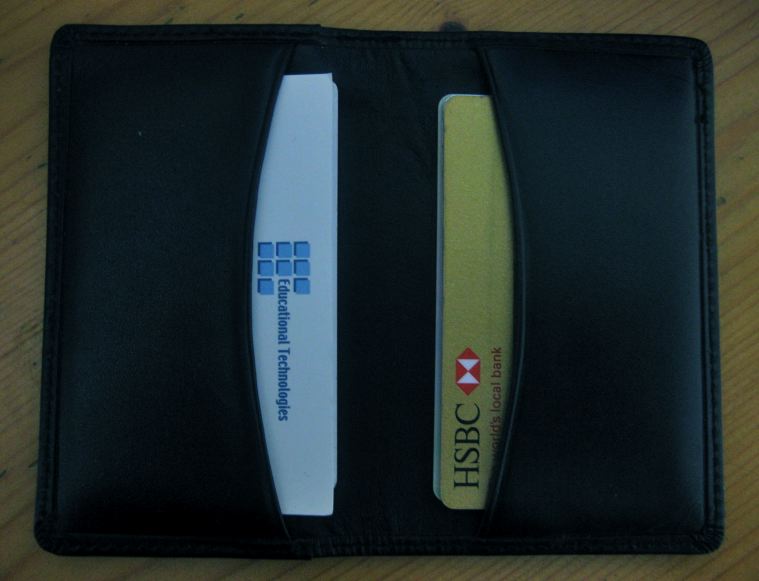
A smaller apartment could encourage you to minimize your possessions. A smaller office could help you keep it clutter-free. A smaller bag could mean traveling light. A smaller wallet would have fewer essentials. A smaller fridge could help eat more fresh foods. What else can you add to the list?

Of course, not everything is better when smaller.

[Photo of my new half-size, two-pocket wallet :)]

Connect with Mush on FacebookTwitterFlickr or YouTube. Subscribe for email updates.

No time to read? Try audio books!

In an earlier post I wrote about the pros and cons of audiobooks. The article was quite popular and did a few rounds around cyberspace. Check it out if you had missed it.

Since writing that post, I have become a big fan of audiobooks. I often listen to them while driving (alone), taking long walks and during sleepless nights on long flights. Besides the seven advantages I listed in the earlier post, I also find it easier to preview an audio version before buying a hardcopy.

Audible has become my favorite place to download audiobooks. There are different subscription plans that offer up to 30% savings and let you download a book of your choice every month. There are thousands of books in various categories, both fiction and non-fiction. If you have a computer with iTune and an MP3 player, try it once. ‘No time to read’ is no more an excuse!

PS. Just downloaded Crush It! by Gary Vaynerchuk for the overnight flight to Dubai – in case none of my fellow passengers wants to tell me her life story 🙂 Off to a bookshop now to buy a real book, just in case the battery on my iPhone runs out 🙂

Connect with Mush on FacebookTwitterFlickr or YouTube. Subscribe for email updates.

What’s the Perfect Time?

What’s the perfect time…

  • to start exercising?
  • to start eating healthy?
  • to start learning a new thing?
  • to start reading?
  • to get organized?
  • to help someone in need?
  • to stop procrastination?
  • to say ‘i love you’?
  • to say ‘thank you’?
  • to quit smoking?
  • to quit drinking?
  • to follow your dream?
  • to take a vacation, to travel?
  • to volunteer for a cause?

So many people spend their lives waiting for the perfect time to do what needs to be done now. What are you procrastinating?

Connect with Mush on FacebookTwitterFlickr or YouTube. Subscribe for email updates.

Never Be Late Again!

Someone recently asked me how I always manage to be on time. My response was, ‘It’s not how, it’s why’. Being on time is easy, if you really want to. Few reasons why being late is bad, whether it’s for business, personal, family or social commitments:

  1. It shows our lack of interest, commitment or passion. Why would anyone hire a person who is late for an interview? Or do business with someone who can’t keep the first commitment? How could a relationship be a priority if our appointments with our loved ones are the first to be compromised?
  2. It demonstrates lack of respect for other people’s time. How do you feel when you somehow manage to show up on time, and then have to wait for the other person?
  3. It sets the wrong example for our family, friends and co-workers – especially for people who look up to us e.g. our children, students or subordinates.

Now some tips on how to be on time:

  1. Give importance. Decide to be on time. Don’t participate in anything half-heartedly.
  2. Plan ahead. Be realistic about how long does it take to get ready and get there. Expect the traffic and other things to go wrong.
  3. Positive affirmations. Telling yourself, ‘I am always on time’ works better than ‘I am always late!’

“I never could have done what I have done without the habits of punctuality, order, and diligence, without the determination to concentrate myself on one subject at a time.” (Charles Dickens)

[Photo of the clock tower in Cardiff]

Subscribe to get latest posts in email. Follow the latest links in Twitter. Forward this link to friends. Friend me up on Facebook.

35 Steps to an Enhanced Life

We all want more happiness, better health, increased productivity and improved relationships. We want to be able to motivate ourselves to do the things we know we should do to enhance our lives. I try to help myself and others to achieve all that through this blog.

Here’s a collection of posts from the last couple of years that I consider to be the best, considering the popularity and comments from the readers. Most articles are short, and take only a few minutes to read. Please let me know through your comments if this collection could form a useful ebook…

Happiness:

Health:

Productivity:

Relationships:

Motivation:

Please take a few minutes to tell me about your most favorite articles, through comments below. Thanks.

[Photo of Kuk Po hike near Tai Po in Hong Kong, taken last week]

7 Pros and 7 Cons of Audiobooks

I just finished my first audiobook. And it was an experience worth sharing:

I had been reading reviews and blog posts and tweets about Seth Godin’s newest book, Linchpin. Went to a couple of bookshops on my way to work/home; it wasn’t available. So I went to Amazon.com to order one. I was at Amazon after a long time, and was surprised to see the options available: Kindle (ebook download), hardcover, paperback, audio CD and audio download. Audio download looked like the fastest option so I checked it out. It took me to Audible.com – an Amazon company, where an audio download was being offered for just USD7.49 with a new membership! I signed up, paid the money, downloaded the book, and started listening to it right away! The benefits:

  1. It’s fast. I was listening to the book after just a few clicks in few minutes.
  2. It’s cheap. Book versions were USD13-25.
  3. It’s convenient. I copied the file to my iPhone to listen during my commute to and from work.
  4. It’s safe. A copy each on my computer, iPhone and backup is likely to last (damage-free) as long as I wish.
  5. It takes no space. So less clutter. No worries about whether to keep, sell off, recycle or give-away.
  6. It’s environment-friendly. No paper, ink, chemicals.
  7. It’s comfortable. For someone who spends a lot of time in front of computers or books, this is a good break for the eyes. You can listen while standing, walking or lying down.

And the disadvantages:

  1. You need technology – computer, Internet access, applications like iTunes, and power supply
  2. You need a handheld device to maximize the use of audiobooks – iPhone, iPod or any other MP3 player Continue reading

Contradictions

Lately, I have been wondering about the contradictions in our thoughts and actions:

  • We want to be slim but we eat too much
  • We want to be smart but we miss the class, or don’t read the books
  • We want happy relationships but we sabotage them with our actions
  • We have dreams but we don’t set goals
  • We want to achieve our goals but we don’t plan
  • We plan but don’t take the action
  • We worry about retirement but we don’t save
  • We want to finish the project but we don’t stay focused
  • We want to wake up early but we don’t go to bed early

The list goes on. Are human beings lazy, indisciplined, indecisive and stupid by nature? Do our genes not have the willpower to fight temptations, to persevere, to do the right thing?

What do you think?

6 Email Mistakes to Avoid

I hesitated about this post because it’s not related to enhancing life. But it will surely enhance your communications over emails. I don’t know about you but I get really peeved about a few things people do when using emails. Here are some established email etiquette to consider:

  1. Subject line. Some people try to convey the entire message in the subject line. And some people never bother to change/update the subject when the topic of the email changes. The subject line should only be used for the subject.
  2. Group emails. If sending an email to a group of people who don’t know each other, put everyone under ‘bcc’ instead of ‘to’ or ‘cc’. Otherwise you expose everyone’s email addresses without their permission.
  3. Reply. Only hit ‘reply all’ if you want all the 100 people on the email to see your reply. Otherwise, hit ‘reply’. This is particularly relevant when sending an acknowledgment to the sender.
  4. Punctuation. have you seen those emails where the writer doesn’t use any punctuation marks those emails are not only difficult to read but also very unprofessional punctuation marks are for a reason and they should be used even in informal emails. SIMILARLY, AN ENTIRE EMAIL IN UPPER CASE IS EQUIVALENT OF YELLING AT SOMEONE. and full emails in lower case are Continue reading

Listening with Your Eyes

A little girl came home from school with a drawing she’d made in class. She danced into the kitchen, where her mom was preparing dinner. ‘Mom, guess what?’ she squealed, waving the drawing. Her mother never looked up. ‘What?’ she said, tending to the pots. ‘Guess what?’ the child repeated, waving the drawing. ‘What?’ the mother said, tending to the plates. ‘Mom, you’re not listening.’ ‘Sweetie, yes I am.’ ‘Mom, you’re not listening with your eyes‘, the child said. (Adapted from Have a Little Faith by Mitch Albom)

How often are we guilty of pretending to be listening, without really paying attention. Listening is one of the most important skills for healthy communications, great relationships and excellent productivity. And like any other skills – driving, cooking, languages – it needs to be learned and developed.

Subscribe to get latest posts in email. Follow the latest links in Twitter. Forward this link to friends. Friend me up on Facebook.

How to Cultivate Confidence – Tim Sanders

Confidence is rocket fuel for your business life. Confident people have a come-this-way charisma that generates a following.  When you possess total confidence you are willing to take risks. When you have it, you propel yourself and your team forward into the future.

Problem: Most people don’t cultivate confidence – it just lands on them due to favorable conditions.  I call this spot confidence.  Good times make for confident people.  Bad times crush them, along with their daring point of view. The secret to unbreakable confidence is a lifestyle of emotional/mental diet and exercise.

  1. Feed Your Mind Good Stuff. Stop reading negative information, listening to negative people or watching cable network news. You are loading up with fear. Replace that information with studies about the future or an improved you. You’ll soon emerge as a solution provider instead of a Chicken Little.
  2. Exercise Your Gratitude Muscle. Gratefulness is a muscle, not a feeling. You need to work it out daily.  Every morning, give thanks to two people that helped you yesterday and one person that will assist you today. This will focus your mind on what you have, and you’ll soon realize you are not alone.

By Tim Sanders, author of Love Is The Killer App: How To Win Business & Influence Friends.

Subscribe to get latest posts in email. Follow the latest links in Twitter. Forward this link to friends. Friend me up on Facebook.

Getting Things Done vs. Making Things Happen

Getting things done is not the same as making things happen.

You can…
…reply to email.
…pay the bills.
…cross off to-do’s.
…fulfill your obligation.
…repeat what you heard.
…go with the flow.
…anticipate roadblocks.
…aim for “good enough.”

Or you can…
…organize a community.
…take a risk.
…set ambitious goals.
…give more than you take.
…change perceptions.
…forge a new path.
…create possibility.
…demand excellence.

Don’t worry too much about getting things done. Make things happen.

By Gina Trapani who blogs about software and productivity at Smarterware. Her new book, The Complete Guide to Google
Wave,
is available to read online for free.

Favorite Quotes on Time

The key is in not spending time, but in investing it. Stephen R. Covey

Make use of time, let not advantage slip. William Shakespeare

This time, like all times, is a very good one, if we but know what to do with it. Ralph Waldo Emerson

A man who dares to waste one hour of life has not discovered the value of life. Charles Darwin

Once you have mastered time, you will understand how true it is that most people overestimate what they can accomplish in a year – and underestimate what they can achieve in a decade! Anthony Robbins

If you want to make good use of your time, you’ve got to know what’s most important and then give it all you’ve got. Lee Iacocca Continue reading

You DO Have The Time!

I have an associate who is always complaining of not having enough time… to respond to emails, to return calls, to eat lunch, to take a holiday, to exercise, to read, to be with her family etc. etc. In case you are wondering, she only has time for her business. Does that sound familiar? We all give that excuse every now and then, don’t we? I believe the real reason behind the excuse is one of the following:

  1. No commitment. One of my favorite quotes: If you are interested, you will do what’s convenient. If you are committed, you will do whatever it takes. This is often the reason why people can’t follow a diet plan, or exercise regularly, or do the things they know they should do. They are just not committed.
  2. No priorities – or wrong priorities. Like in the case of my friend, her only priority is her business. She believes everything else can wait, until she is a millionaire. When I have difficulty leaving the office on time, with unfinished work, I ask myself: When I am 70 or 80, will I regret not spending enough time in the office, or not spending enough time with my family?
  3. No time management. Everyone has 24 hours in a day but some people get a lot more out of these hours than the others. Think about 86,400 seconds being given to you right now. And you have 24 hours to use it or lose it, forever. Check out the 4 D’s of Time Management.

I overheard a dialogue in Kung Fu Panda that my kids were watching last night. The wise old turtle tells the panda: Yesterday is gone; tomorrow is a mystery; today is a gift – that’s why it’s called present.

Let’s make today count. Let’s stop telling ourselves or others that we don’t have the time. Because we know we do.

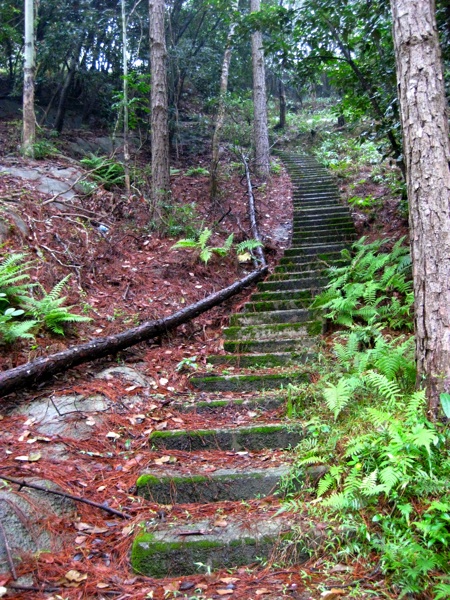
[Photo taken during a hike in Tung Chung, Hong Kong]

Subscribe to get latest posts in email. Follow the latest links in Twitter. Forward this link to friends.

7 Tips for an Organized Desk

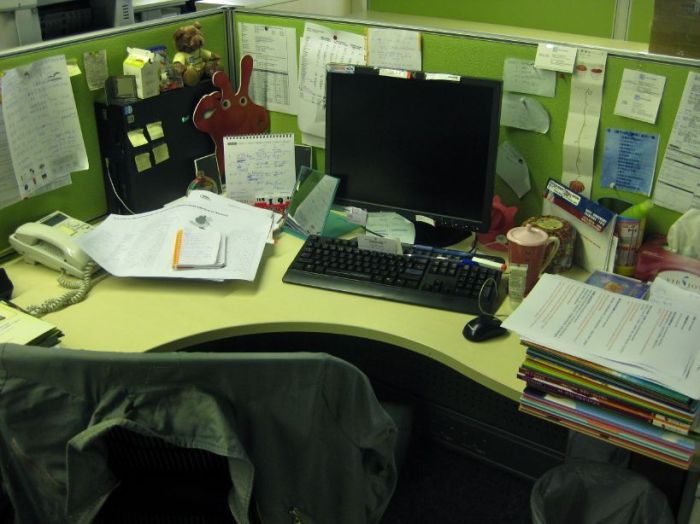
0909 cluttered desk

Do you have a desk full of papers you are working on, and papers you are not working on, and a few books and magazines? And dozens of pens and cups and post-its and cables? Do you think it’s a sign of creativity or imagination? The truth is, you are either too lazy to clean it up or you don’t know how. A clean desk saves you time looking for stuff; it helps you prioritize, and focus better on the tasks at hand. Here are few tips for a clean desk:

  1. Don’t collect. Don’t take those cheap gift items like pens, note pads, post-its, magazines just because they are free. Or anything else that will likely end up as trash on your desk. Throw away or give away all those pens and pencils that you don’t use. Couple of family photos or frames are OK, but more than that are a distraction. You can put them in Flickr and watch a slideshow whenever you like.
  2. Learn to deal with paper. Don’t print or copy unless necessary. For me, there are only three places for papers: trash it (or shred it or recycle it), file it away or keep in one of your ‘work-in-progress’ folders. Have a bin, shredder and recycle tray handy so you’ll never be guilty of throwing what can be recycled or afraid to trash confidential stuff.
  3. Organize in clear folders. Create clear folders with labels for all the ongoing projects. These are your ‘work-in-progress’ folders. You could also have another clear folder called ‘action’ or ‘process’ or ‘today’. This has all those 2-minute papers that you can read and trash, or forms to fill, or things to sign and pass on. Deal with this folder only once a day.
  4. The 4 D’s of time management also apply to papers. Drop it (trash it), Delay it (work-in-progress folder or the action folder), Delegate it (pass it on) or Do it (do it now, or file it away). Continue reading

6 Leadership Lessons from Orchestra Conductors

An orchestra conductor faces the ultimate leadership challenge: creating perfect harmony without saying a word. In this charming talk, Itay Talgam demonstrates the unique styles of six great 20th-century conductors, illustrating crucial lessons for all leaders.

Smaller the Better!

0911 kittens

From  Minimalist.com, one of my favorite blogs:

Less can come in many forms. You can have fewer things, you can do fewer things, you can use fewer things, you can focus on fewer things. But less isn’t just fewer: it can also be smaller.

Small is often downplayed in this world of “bigger means better”. But small is beautiful, and often better.

  • Smaller banks aren’t “too big to fail”, requiring bailouts when they’re mismanaged, and yet they make very important community loans.
  • Smaller teams are more nimble, can adapt to changing environments faster, don’t require as much management or communication overhead, can work cheaply and from anywhere.
  • Smaller cars use less gas, are more maneuverable, cause fewer deaths, use fewer resources.
  • Smaller homes require less heating, less cleaning, less maintenance, force you to simplify, are cozier.
  • Smaller programs use fewer computer resources, take up less computer power and thus help the environment, work faster, get the job done with a minimum of fuss.
  • Smaller suitcases (such as a small backpack) are easier to carry around, fit easier in overhead compartments, don’t require you to check luggage and worry about luggage not getting to the right destination, are easier to pack and unpack.
  • Smaller websites (in terms of file sizes) are easier to load, faster, more responsive.
  • Smaller companies are also more responsive, less expensive, hungrier, more focused.
  • Haikus pack a lot of punch into three tiny lines.
  • Smaller posts don’t take as much time to write or read, which is good for a lazy blogger. And a busy reader.

Small is beautiful. Aim for smaller when it makes sense, and enjoy the wonder that ensues.

[Photo of Mashu’s kittens]

Subscribe to get latest posts in email. Follow the latest links in Twitter. Forward this link to friends.

Take our Stress Poll…

0910 stressed woman

Clutter is Procrastination

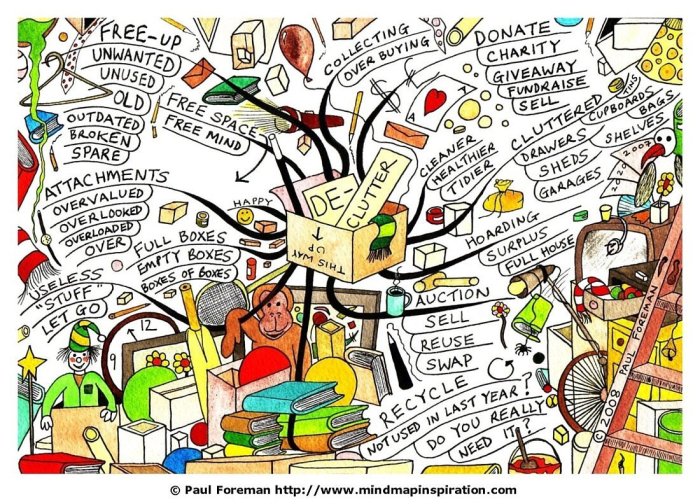
0909 declutter

An excellent post by Leo in Mnmlist.com – one of my favorite blogs:

When our houses or offices get piled with clutter, much of the reason is procrastination.

We all procrastinate — let’s just get that out in the open. There’s not a one of us who doesn’t, to some degree. But while our tasks and projects can pile up, giving us some anxiety, the clutter is a visual sign of that procrastination, and carries with it just as much anxiety.

When we put down an object, a piece of paper, an article of clothing, a stack of mail … and we leave it there, undealt with, saying that we’ll put it away or deal with it later … that’s procrastination.

Unfortunately, this piles up, accumulates over time, and then we’re stuck with a mountain of clutter that’s too overwhelming to deal with. You’ll need to deal with that mountain. I’ve shown you some methods. Get it down to minimal, and enjoy that.

But once you’ve dealt with the mountain, you need to stop it from happening again. That’s where beating your procrastination habits becomes so important. When you’re going to put something down, deal with it right now. It only takes a few seconds. Continue reading